Athens is one of those cities that works brilliantly for solo travelers. The neighborhoods are walkable. The food is cheap and delicious. The locals are warm (sometimes aggressively so — you will be waved into restaurants). Public transport is reliable. And the city is safe enough that you can wander at midnight without thinking twice.
I’ve spent time in Athens alone and with company, and honestly? Some of my best moments there were solo. Sitting on the Areopagus hill at sunset with a souvlaki in one hand, watching the Parthenon turn gold, surrounded by strangers all doing the same thing — that’s a shared experience you don’t need a travel partner to enjoy.
Santorini is roughly 300 kilometers southeast of Athens, floating in the Aegean Sea like something a movie set designer dreamed up. The caldera, the sunsets, the blue-domed churches — you already know what it looks like because it’s on every Greece travel poster ever printed.
The question isn’t whether to go. It’s how to get there.
You have two realistic options: ferry or flight. Both work. Both have trade-offs. And the “right” choice depends entirely on your budget, your schedule, and how you feel about open water. Here’s everything you need to make the call.
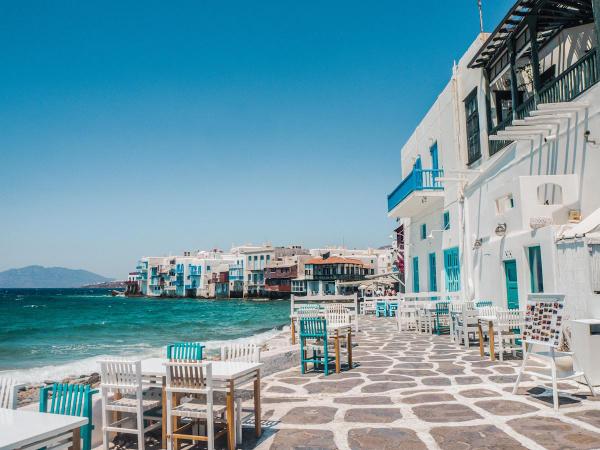
Mykonos is one of those places that barely needs an introduction. Whitewashed streets, windmills, beach clubs, a pelican named Petros who wanders the harbor like he owns the place (he does). It’s been Greece’s party island since the ’60s, but it’s also genuinely beautiful — the kind of place where even the narrow alleys look like someone art-directed them.
Getting there from Athens is straightforward. You can take a ferry or fly. Both are well-established routes with multiple daily options in season. The choice comes down to how much time you have, how much you want to spend, and whether you’d rather watch the Aegean from a deck or a window seat at 20,000 feet.
Picking the right neighborhood in Athens is half the battle. Stay in the wrong spot and you’ll spend your trip in taxis. Stay in the right one and you’ll walk out the door into exactly the Athens you came for.
I’ve stayed in almost every central Athens neighborhood at this point — the touristy ones, the local ones, the trendy ones, and the ones I wouldn’t recommend. Here’s what I actually think about where to stay in Athens, broken down by neighborhood, budget, and traveler type, plus specific hotel picks I’d book myself.
I’ll be honest: an Acropolis view from your hotel room is one of those things that sounds like a tourist gimmick until you actually experience it. Then you’re standing on your balcony at sunset, the Parthenon turns golden, and you realize this is why people come to Athens.
Not every hotel that claims an “Acropolis view” delivers. Some give you a sliver of the Parthenon between two apartment buildings. Others put you on a rooftop where the entire ancient citadel fills your field of vision. The difference matters.
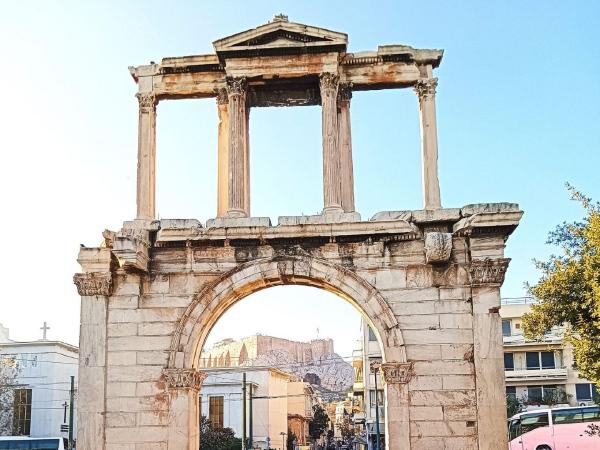
You don’t need a guide to see Athens. The city’s historic center is compact, walkable, and follows a natural route that connects the major sites in a logical loop. With a good map and some context about what you’re looking at, you can cover the best of Athens in a single day on foot — at your own pace, on your own schedule, stopping where you want and skipping what doesn’t interest you.
Here’s something that surprised me about Athens: you can be sitting on a Greek island, swimming in turquoise water, eating fresh seafood by a harbor — and be back in your Athens hotel by dinner. The Saronic Islands are that close.
Aegina, Poros, and Hydra sit in the Saronic Gulf, between 40 minutes and two hours from Athens by ferry. They’re the easiest island escape you’ll find, and they’re completely different from each other. One has a famous temple and the best pistachios in Greece. One is covered in pine forests and smells like a candle shop. And one has banned cars entirely and replaced them with donkeys.
Athens doesn’t usually top the “romantic getaway” lists. Paris gets the love locks. Santorini gets the sunset proposals. But Athens? Athens is where romance sneaks up on you — over a candlelit dinner where the Parthenon is glowing right above your table, on a sailboat watching the sun melt into the Aegean, or walking through a hidden neighborhood that feels like your own private discovery.
My partner and I have done the romantic circuit in Athens more than once, and every time we find something new that makes us want to come back. Here are the best romantic things to do in Athens — from the iconic to the unexpected.
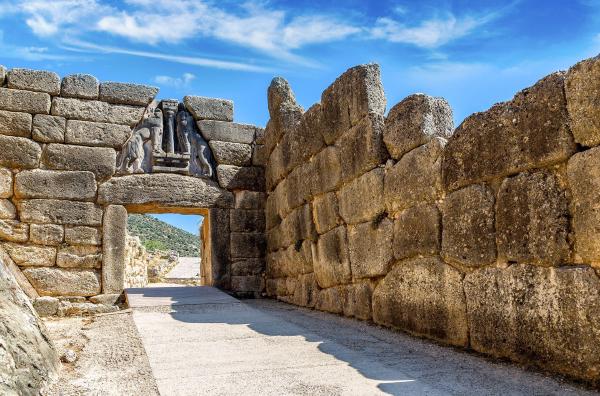
If the Acropolis is where ancient Athens flexed its power, the Peloponnese is where the rest of Greek civilization happened. Mycenae, where Agamemnon ruled before sailing off to Troy. Epidaurus, where a theater built 2,300 years ago has better acoustics than most modern concert halls. Nafplio, a Venetian port town so charming it makes you want to cancel the rest of your trip and just stay.
All of it is 1.5-2 hours from Athens. An easy day trip. And somehow, a lot of visitors skip it entirely — which means fewer crowds and a much more personal experience than the Acropolis on a busy morning.
Athens has a dirty secret that the tour companies don’t want you to know: some of the best experiences in the city are completely free.
You can watch the sunset behind the Parthenon without paying a cent. You can walk through 2,500 years of history on ancient streets that don’t charge admission. You can visit world-class museums on their free days. You can eat samples at the Central Market, explore street art in Psyrri, attend outdoor concerts in summer, and experience Greek culture without opening your wallet.
When I first mentioned taking kids to Athens, a friend looked at me like I’d suggested bringing toddlers to a construction site. “Isn’t it just ruins and hills? In the heat? With no playgrounds?”
She was wrong on all counts. Athens is surprisingly fantastic for families — the ancient sites are basically the world’s biggest adventure playground, Greek people are genuinely wonderful with kids (your children will be fussed over in every restaurant), and the food is the kind of uncomplicated deliciousness that even picky eaters can get behind.
I’ve spent a lot of time in both Athens and Rome. I love both cities. And I’m going to be honest with you upfront: there’s no wrong answer here. Both are extraordinary places with thousands of years of history, incredible food, and the kind of atmosphere you can’t find anywhere else.
But they’re very different. And depending on what you want from a trip — what you eat, how you spend your evenings, how much you want to spend, what kind of history excites you — one will suit you better than the other.