I’m going to give you the practical, no-fluff version of everything you need to know about visiting the Acropolis — because I’ve made most of the mistakes so you don’t have to. I’ve been there in August heat (brutal), in January drizzle (slippery), and at 8 AM on a Tuesday in April (perfect). Here’s what I’ve learned.
Quick Facts#
| Location | Central Athens, visible from basically everywhere |
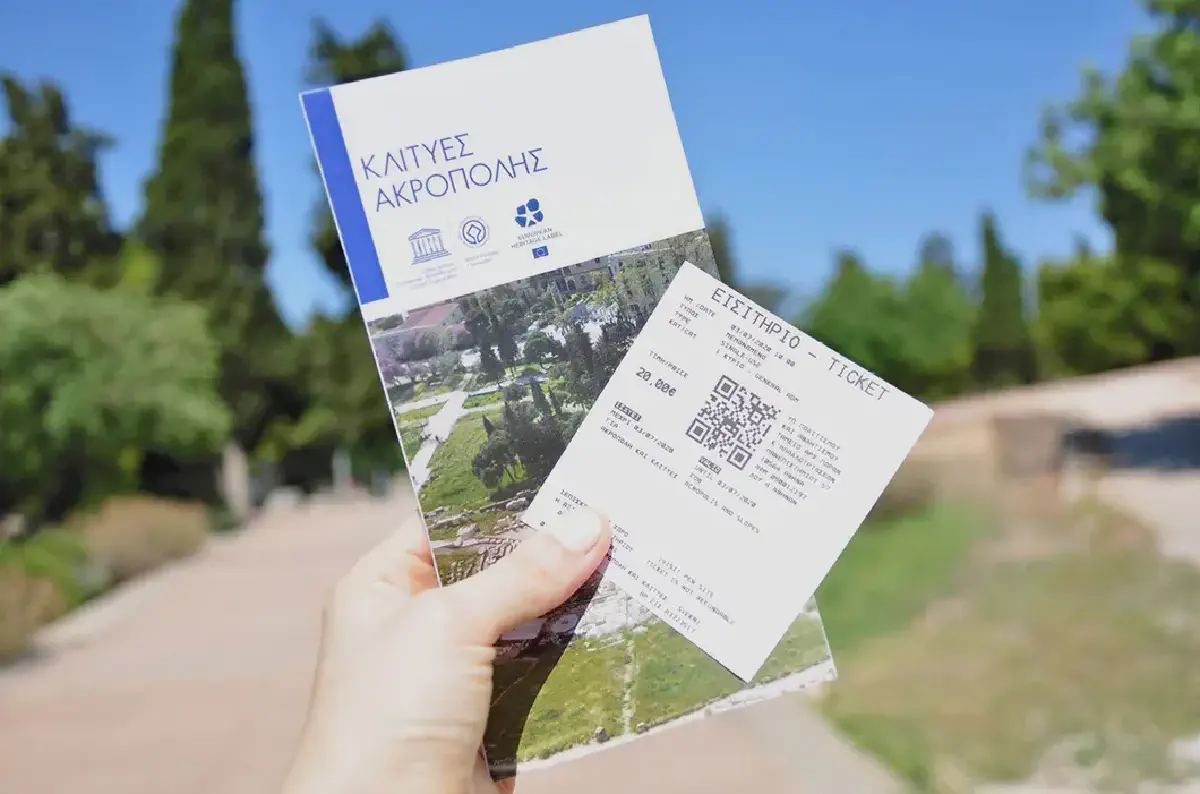
| Entry fee | €20 single / €30 combo ticket |
| Hours | 8 AM - 8 PM (summer), reduced in winter |
| Time needed | 2-3 hours |
| Best time | 8 AM opening or late afternoon |
Tickets & Prices (2026)#
Ticket Options#
| Ticket | Price | Includes |
|---|---|---|
| Acropolis only | €20 | Acropolis + slopes |
| Combo ticket | €30 | Acropolis + 6 other sites |
| Reduced (EU students, seniors) | €10/€15 | Same access |
| Free entry | €0 | Under 18, specific dates |
The Combo Ticket (Recommended)#
The €30 combo ticket includes:
- Acropolis
- Ancient Agora
- Roman Agora
- Hadrian’s Library
- Temple of Olympian Zeus
- Kerameikos
- Aristotle’s Lyceum
Valid for 5 days. If you plan to visit even 2-3 of these sites, the combo ticket saves money. I always get it — the Ancient Agora alone is worth the extra €10.
Free Entry Days#
- First Sunday of the month (November - March)
- March 6 — In memory of Melina Mercouri
- April 18 — International Monuments Day
- May 18 — International Museum Day
- September 27 — World Tourism Day
- October 28 — Ohi Day
Fair warning: Free days are extremely crowded. Like, shoulder-to-shoulder crowded. Personally, I’d rather pay €20 and actually enjoy the experience, but if budget is tight, go early and prepare for crowds.
Where to Buy Tickets#
Online (Recommended)#
- Official site: etickets.tap.gr
- Book in advance to skip ticket lines
- Select your entry time slot
On-Site#
- Ticket booths at both entrances
- Can have long lines in peak season
- Cash and cards accepted
Via Tours#
- Most guided tours include tickets
- Skip-the-line access included
Opening Hours#
Summer (April 1 - October 31)#
- Hours: 8:00 AM - 8:00 PM
- Last entry: 7:30 PM
Winter (November 1 - March 31)#
- Hours: 8:00 AM - 5:00 PM
- Last entry: 4:30 PM
Closed#
- January 1
- March 25
- May 1
- Easter Sunday
- December 25-26
Best Time to Visit#
By Time of Day#
| Time | Crowds | Experience |
|---|---|---|
| 8:00 AM (opening) | Low | Best for photos, cooler |
| 10 AM - 2 PM | Peak | Avoid if possible |
| 2 - 4 PM | High | Hot in summer |
| 4 - 8 PM | Moderate | Beautiful light, sunset |
My recommendation: Arrive at 8 AM sharp. I know that sounds early when you’re on vacation, but trust me — you’ll have 1-2 hours before the tour groups arrive, the morning light is gorgeous for photos, and in summer you’ll avoid the worst of the heat. Every time I’ve gone later than 10 AM, I’ve regretted it.
By Season#
| Season | Weather | Crowds |
|---|---|---|
| Spring (Apr-May) | Perfect | Moderate |
| Summer (Jun-Aug) | Hot (35-40°C) | Very high |
| Fall (Sep-Oct) | Great | Moderate |
| Winter (Nov-Mar) | Cool, some rain | Low |
Best months: April, May, September, October. Good weather, manageable crowds, actual breathing room around the Parthenon.
What You’ll See#
Main Monuments#
Parthenon The one you came for. Dedicated to Athena, built 447-432 BC, and still the most recognizable ancient structure in the world. You can’t go inside, but walking around it and taking in the sheer scale of the thing — the columns, the detail, the fact that people built this 2,500 years ago — is genuinely awe-inspiring.
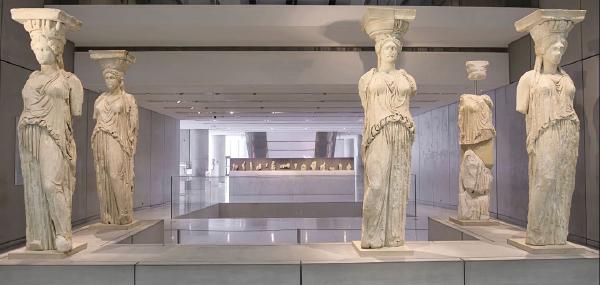
Erechtheion The temple with the famous Caryatid porch — six female figures serving as columns. The ones up here are copies; the originals are safely in the Acropolis Museum. Still beautiful, still worth your attention.
Propylaea The monumental gateway to the Acropolis. You walk through this on the way in, and the moment you emerge on the other side and see the Parthenon… that’s the moment. Architects designed it specifically for dramatic reveal, and 2,400 years later it still works.
Temple of Athena Nike Small but beautiful temple celebrating victory (Nike). It’s on your right as you enter through the Propylaea. Easy to overlook if you’re rushing toward the Parthenon — take a minute to appreciate it.
Odeon of Herodes Atticus Roman-era theater still used for performances today. You can see it from above on the Acropolis but enter separately for shows. If there’s a performance during your visit, it’s a remarkable experience — watching live music in a 2,000-year-old theater.
Theater of Dionysus The birthplace of Greek drama. Sophocles, Euripides, Aristophanes — they all premiered their work right here. It’s on the southern slope and often gets skipped. Don’t skip it.
The Slopes#
Your ticket includes the slopes (hillsides), which have additional ruins and significantly fewer crowds. If you need a breather from the main plateau, wander down here.
How to Visit#
Getting There#
Metro: Akropoli station (Line 2, Red) — 5-minute walk to the entrance. This is how I always get there.
Walking: From Monastiraki or Plaka — follow signs uphill. Hard to get lost when you’re walking toward the giant ancient temple on a hill.
Entrances#
Main entrance (South): Near Akropoli metro, most popular, more obvious
East entrance: Near Plaka, sometimes shorter lines
Both entrances lead to the same area. The main entrance is more straightforward; the east entrance is my secret weapon during peak season.
Route Through the Site#
- Enter through Propylaea (main gateway) — pause here, take it in
- Temple of Athena Nike (to your right)
- Parthenon (straight ahead, center) — walk all the way around it
- Erechtheion (north side) — Caryatids are on the south porch
- Viewpoints (take your time, look at the city from every angle)
- Exit via slopes or retrace your steps
Essential Tips#
What to Bring#
- Water — This is non-negotiable. There are limited fountains and it gets hot fast
- Sun hat — Little shade on the main plateau
- Sunscreen — Apply before you go up. Reapply at the top
- Comfortable shoes — Uneven marble surfaces everywhere
- Camera — Obviously
- Layers — Can be surprisingly windy at the top, even in summer
What to Wear#
- Rubber-soled shoes — I cannot overstate how important this is. The marble is slippery.
- Light, breathable clothing — It’s hot in summer, and you’re climbing
- Nothing formal — You’ll be sweating and scrambling
What NOT to Do#
- Don’t touch the monuments — Oils from your hands damage ancient stone. I know it’s tempting.
- Don’t climb on ruins — Disrespectful and genuinely dangerous
- Don’t use flash photography — In covered areas
- Don’t bring large bags — Security check at the entrance, but free lockers are available
- Don’t visit midday in summer — I did this once in July. The marble radiates heat like an oven. I lasted 40 minutes. Go early or late.
Visiting with Limited Mobility#
The Acropolis is challenging for those with mobility limitations — there are stairs and uneven ground everywhere. However:
- Elevator available: An elevator provides access from the base to the main plateau for wheelchair users
- Call ahead: Contact the site to arrange accessible entry
- Note: Even with elevator access, the surfaces at the top are uneven
Guided Tours vs. Self-Guided#
Guided Tours#
Pros:
- Expert context and stories that bring the ruins to life
- Skip-the-line access (huge in peak season)
- Headsets so you can hear over crowds and wind
- You can actually ask questions
Cons:
- Fixed schedule
- Group pace (might be faster or slower than you’d like)
- Higher cost
My take: For first-time visitors, I genuinely recommend a guided tour. The Acropolis has almost no signage — without a guide or audio tour, you’re mostly looking at impressive rocks without understanding what made them so extraordinary. A good archaeologist-guide transforms the experience.
Acropolis Small Group Tour with Skip-the-Line
Maximum 8 people with licensed archaeologist guide. Skip ticket lines, learn the stories behind the stones. 2-hour tour includes entrance ticket.
Also on Viator: Book this tour on Viator →
Self-Guided#
Pros:
- Your own pace (spend 10 minutes or 10 hours at the Parthenon)
- Cheaper
- Complete flexibility
Cons:
- Miss historical context that makes everything meaningful
- No one to answer your “but why did they…?” questions
- Can feel a bit aimless
Tip for self-guided: Download an audio guide app before your visit. The official “Acropolis” app uses GPS to trigger information at each location. It’s not as good as a real guide, but it’s a solid backup.
After the Acropolis#
Don’t just leave — some of the best experiences are right nearby:
Acropolis Museum#
Walk directly downhill to the world-class museum housing original sculptures. Separate ticket (€15). The cafe on the top floor has Acropolis views and decent coffee — a good recovery spot.
Areopagus Hill#
Rocky outcrop just below the Acropolis. Free access, amazing views, perfect for sunset. This is where I always end up after an Acropolis visit, sitting on the rocks and processing what I just saw.
Ancient Agora#
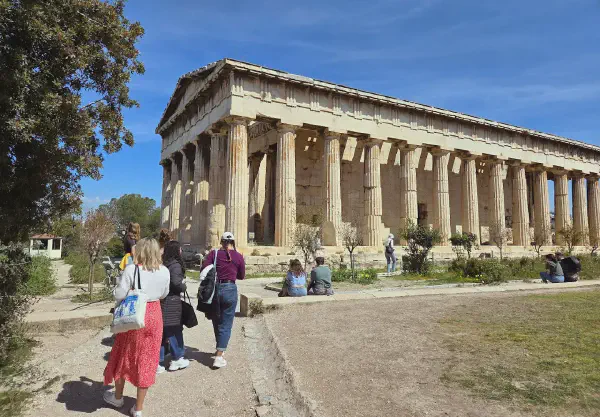
Use your combo ticket. 10-minute walk via Thissio. The Temple of Hephaestus here is actually better preserved than the Parthenon.
Plaka#
The neighborhood at the foot of the Acropolis. Wander the narrow streets, find lunch, browse souvenir shops (some are actually good).
Frequently Asked Questions#
How much does it cost to visit the Acropolis?#
€20 for Acropolis only, €30 for the combo ticket (includes 6 additional sites). Reduced prices for EU students and seniors.
How long do you need at the Acropolis?#
Most visitors spend 2-3 hours. If you’re a serious history enthusiast, you could spend longer exploring the slopes. If you’re in a hurry, you can hit the highlights in 90 minutes — but I’d recommend giving it proper time.
Do I need to book tickets in advance?#
In peak season (June-September), strongly recommended — it saves you from ticket line waits. In low season, you can usually walk up and buy on the spot without issues.
Is the Acropolis worth it?#
I get asked this surprisingly often, and the answer is absolutely yes. It’s genuinely extraordinary — one of the most important ancient sites on Earth. Don’t skip it to save €20. You’ll regret it.
Can I see the Acropolis without paying?#
You can see it from many spots around Athens — Areopagus, Filopappou Hill, rooftop bars, basically anywhere with elevation. The views are free and often spectacular. To actually walk among the ruins, you need a ticket or visit on a free entry day.
Is there shade at the Acropolis?#
Very little. The main plateau is almost completely exposed. Bring sun protection and water, especially May through September.
Can I bring a backpack?#
Small bags are fine. Large backpacks go through security and may need to be checked — free lockers are available at the entrance.
The Bottom Line#
The Acropolis lives up to its reputation. I don’t say that about many tourist attractions, but this one earns it. Even if you’re not particularly into ancient history, standing on the same rock where Socrates walked, where democracy was born, and where Western civilization shaped itself — it does something to you.
Plan your visit: Arrive at 8 AM, buy the combo ticket, wear proper shoes, bring water, and give yourself enough time to actually soak it in. Don’t rush the Acropolis. It’s been waiting 2,500 years for you — you can give it a proper morning.
Planning more Athens sightseeing? Check out our Acropolis tours guide and 3-day Athens itinerary.