The Athens metro might be the most underrated one in Europe. It’s clean, it’s air-conditioned (a genuine blessing in summer), the signage is clear, and — here’s the kicker — several stations double as free archaeological museums because they kept finding ancient artifacts while digging the tunnels. Only in Athens.
Here’s everything you need to know about using the Athens metro like a local.
Athens Metro Overview#
Three lines. That’s it. If you can count to three, you can navigate the Athens metro.
| Line | Color | Route | Useful For |
|---|---|---|---|
| Line 1 | Green | Piraeus ↔ Kifisia | Piraeus port, Thissio, Monastiraki |
| Line 2 | Red | Anthoupoli ↔ Elliniko | Acropolis, Syntagma, Omonia |
| Line 3 | Blue | Airport ↔ Aghia Marina | Airport, Syntagma, Monastiraki |
Key interchange stations:
- Syntagma — Lines 2 and 3 meet (you’ll pass through here a lot)
- Monastiraki — Lines 1 and 3 meet
- Omonia — Lines 1 and 2 meet
Tickets & Prices (2026)#
| Ticket Type | Price | Valid For |
|---|---|---|
| Single journey | €1.20 | 90 minutes, all transport |
| 24-hour pass | €4.10 | Unlimited rides |
| 5-day pass | €8.20 | Unlimited rides |
| 3-day tourist pass | €20 | Unlimited + airport journey |
| Airport single | €9 | One-way airport trip |
| Airport return | €16 | Return airport trip (7 days) |
Important detail that trips people up: Airport trips require a special ticket. Your regular €1.20 ticket will not work for the airport section of Line 3. I’ve watched tourists get caught by this at the airport gates — buy the right ticket and save yourself the hassle.
How to Buy Tickets#
Ticket Machines#
- At every metro station
- Accept cash and cards
- Language options include English (and several others)
- Genuinely easy to use — I’ve seen first-time visitors figure them out in under a minute
Ticket Windows#
- Staffed booths at major stations
- Good for questions or complicated requests
- Can sometimes have queues during rush hour
Athens Transport App#
- Buy tickets on your phone
- QR code validation at the gates
- Handy if you hate carrying paper tickets
Paper vs. Digital#
Both work fine. I usually go paper because it doesn’t require phone battery, and Athens has a way of draining your phone battery with all the photo-taking. But digital is convenient if you’re already phone-dependent.
How to Use the Metro#
Step 1: Buy Your Ticket#
Machines or windows at any station. Takes about 30 seconds.
Step 2: Validate Your Ticket#
This is the step people forget. You must tap or scan your ticket at the yellow readers before entering the platform area. An unvalidated ticket is the same as no ticket in the eyes of inspectors.
Step 3: Find Your Platform#
Signs show the direction by the final station name. For example:
- Line 2 toward “Elliniko” = heading south (Acropolis direction)
- Line 2 toward “Anthoupoli” = heading north
It sounds confusing in theory but makes immediate sense when you’re looking at the signs.
Step 4: Board and Ride#
Trains are clean and air-conditioned. Announcements come in Greek first, then English. Plenty of space for luggage.
Step 5: Exit#
Keep your ticket — some stations have gates on exit that need it. I’ve seen people toss their ticket in the train and then stand awkwardly at the exit gates. Don’t be that person.
Metro Lines Explained#
Line 1 (Green) — Piraeus to Kifisia#
The oldest line, dating back to 1869 — making it one of the oldest metro lines in the world. Mostly above ground, connecting the port to northern suburbs.
Tourist-relevant stations:
- Piraeus — Where the ferries to the islands leave from
- Thissio — Ancient Agora area, gorgeous pedestrian promenade with Acropolis views
- Monastiraki — Flea market, restaurants, central hub
Note: Line 1 is visibly older and less polished than Lines 2 and 3, but it works perfectly fine. Think of it as the metro’s vintage wing.
Line 2 (Red) — Anthoupoli to Elliniko#
The main tourist workhorse. This is probably the line you’ll use most.
Tourist-relevant stations:
- Omonia — Central square, walking distance to National Archaeological Museum
- Panepistimio — Neoclassical university buildings (worth a look from street level)
- Syntagma — Parliament, Plaka, the central hub of everything
- Akropoli — Acropolis, Acropolis Museum, Koukaki neighborhood
- Syngrou-Fix — Koukaki (alternative stop if you’re staying there)
Line 3 (Blue) — Airport to Aghia Marina#
The airport connector and also serves central Athens.
Tourist-relevant stations:
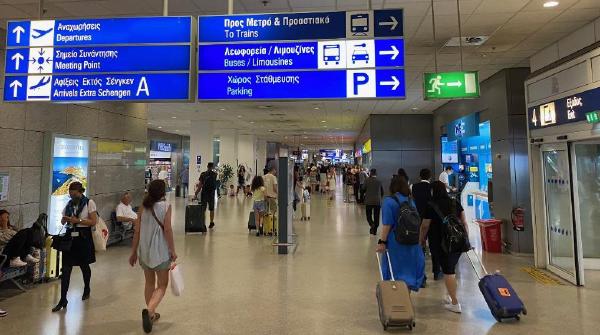
- Airport — Athens International Airport (40 min from center)
- Syntagma — Central interchange, connects to Line 2
- Monastiraki — Markets, Ancient Agora, connects to Line 1
- Kerameikos — Gazi nightlife area
Key Stations for Tourists#
A quick cheat sheet — clip this to your phone:
| Destination | Station | Line |
|---|---|---|
| Acropolis | Akropoli | Line 2 (Red) |
| Acropolis Museum | Akropoli | Line 2 (Red) |
| Plaka | Syntagma or Monastiraki | Lines 2, 3 |
| Monastiraki Flea Market | Monastiraki | Lines 1, 3 |
| Ancient Agora | Monastiraki or Thissio | Lines 1, 3 |
| National Archaeological Museum | Omonia (then walk 10 min) | Lines 1, 2 |
| Piraeus Port | Piraeus | Line 1 (Green) |
| Airport | Airport | Line 3 (Blue) |
| Syntagma Square | Syntagma | Lines 2, 3 |
| Gazi Nightlife | Kerameikos | Line 3 (Blue) |
Metro Operating Hours#
| Weekdays | Weekends | |
|---|---|---|
| First train | 5:30 AM | 5:30 AM |
| Last train | 12:30 AM | 12:30 AM |
| Frequency | 3-10 min (peak), 10-15 min (off-peak) | 10-15 min |
Airport line: First train around 6:30 AM, last around 11:30 PM. Trains only every 30 minutes, so check the schedule and don’t be the person sprinting through the station because you missed one by 2 minutes. (I was that person once.)
Metro Tips from Experience#
1. Syntagma Station Is a Free Museum#
The Line 2/3 interchange at Syntagma has display cases full of artifacts found during construction — pottery, tools, even graves. It’s a free mini-museum you walk through while changing trains. Take a minute to actually look.
2. Avoid Rush Hour If You Can#
8-9:30 AM and 5-7 PM get crowded. If you’re flexible, avoid these windows for a more comfortable ride. Plus, this means arriving at sites either before or after the main rush — win-win.
3. Watch for Pickpockets#
The metro is safe, but pickpockets do operate on crowded trains, particularly around Monastiraki and Syntagma. Keep valuables in front pockets or a zipped bag. Nothing to be paranoid about, just aware.
4. Airport Tickets Are Special#
I’m saying it again because it trips people up: the regular €1.20 ticket doesn’t work for airport trips. You need the specific airport ticket (€9 single, €16 return). The gates will literally reject your regular ticket.
5. Escalator Etiquette#
Stand on the right, walk on the left. Athenians will let you know with their eyes if you get this wrong. I learned quickly.
6. Download Offline Maps#
Google Maps works well for Athens transit routing, even offline. Download the Athens area map before you arrive, and you’ll always know which line to take.
Metro + Other Transport#
Your metro ticket also works on:
- Buses — Same ticket, same validation rules
- Tram — Runs along the coast to the beach areas
- Trolleybuses — Electric buses in central Athens
The €4.10 day pass covers all of the above (except airport trips). One ticket, everything included. Simple.
Beyond Metro: Other Transport#
Tram#
Runs from Syntagma along the coast to Glyfada and Voula. Useful for Athenian Riviera beaches on a hot afternoon. Slow but scenic.
Bus#
Extensive network but honestly more confusing than the metro. The X95 airport bus (runs 24 hours) is the most useful for tourists. Everything else, you can probably cover by metro and walking.
Taxi / Beat#
The Beat app is the Greek equivalent of Uber — metered, reliable, and the drivers actually know where they’re going. My recommendation for any trip the metro can’t cover, especially late at night.
Walking#
Here’s the thing: central Athens is extremely walkable. Most tourist attractions are within 20-30 minutes of each other on foot. I use the metro maybe 2-3 times a day at most, and walk everything else. Your feet are your best transport option in this city.
Frequently Asked Questions#
Is the Athens metro easy to use?#
Very. Three lines, color-coded, clear signage, announcements in English. I’d rank it among the simplest metro systems in Europe. If you’ve used any metro anywhere, you’ll figure this one out immediately.
How much is a metro ticket in Athens?#
€1.20 for a single journey (90 minutes of unlimited transfers), €4.10 for a day pass, €9 for a one-way airport trip.
Do I need to validate my ticket?#
Yes. Always. Every time. The yellow validators are right at the entrance. Skip this step and you risk a €60 fine. It takes two seconds.
Is the metro safe at night?#
Yes — it’s well-lit, has security cameras, and runs until 12:30 AM. Normal urban precautions apply: watch your belongings, stay aware.
Does the metro go to the airport?#
Yes — Line 3 (Blue) runs directly from Syntagma to Athens International Airport in about 40 minutes. Trains every 30 minutes.
Can I use my metro ticket on buses?#
Yes — the same ticket works on metro, buses, tram, and trolleybuses within its validity period (90 minutes for a single, unlimited for day/multi-day passes).
The Bottom Line#
The Athens metro is clean, cheap, easy, and gets you everywhere you need to go. Three lines, clear signs, English announcements. For most tourists, Lines 2 (Red) and 3 (Blue) cover everything — the Acropolis, Syntagma, Monastiraki, and the airport.
My approach: Buy a day pass (€4.10) if you’ll make 4+ trips, or the 3-day tourist pass (€20) if you’re doing an airport round trip plus daily sightseeing. Walk everything else. Athens is best on foot anyway.
Planning your Athens trip? Check out our airport transfer guide and 3-day itinerary.