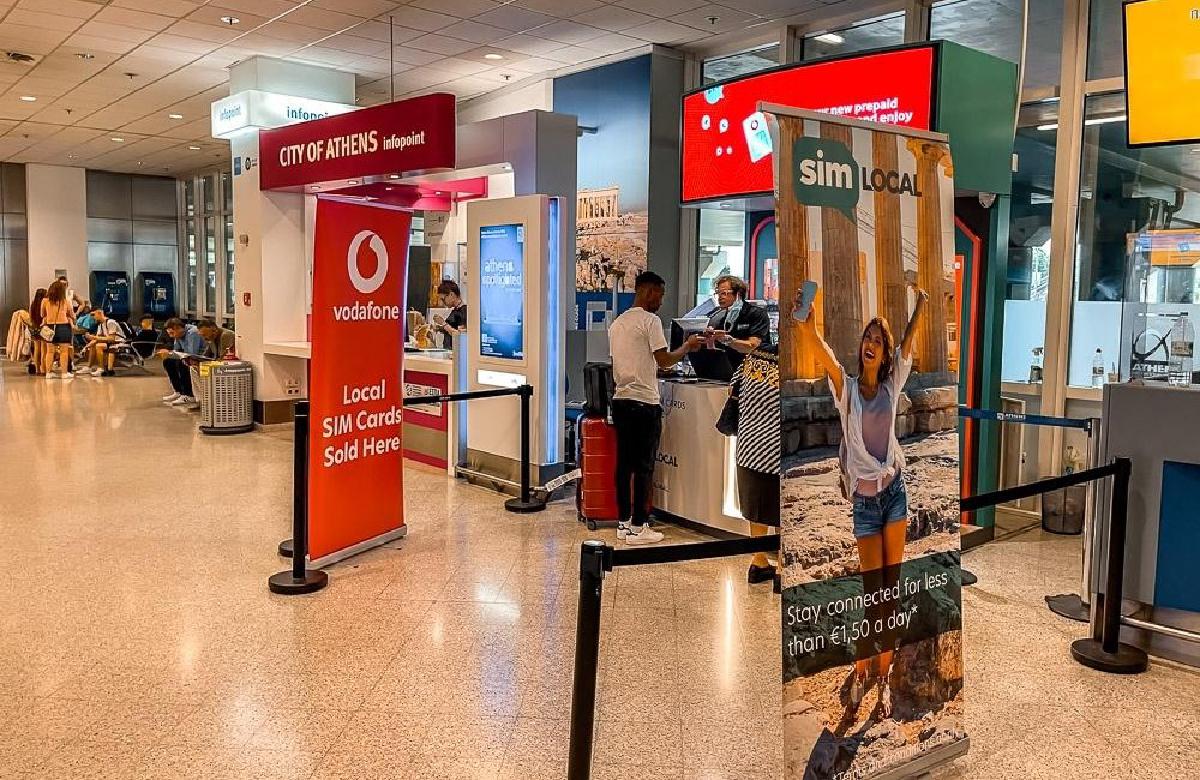
I landed in Athens at midnight on my first trip, exhausted, with no data on my phone. Couldn’t pull up my hotel address, couldn’t check if the airport bus was still running, couldn’t message anyone. I ended up paying a taxi driver whatever he asked because I had no way to verify the fare. Never again.
Staying connected in Greece isn’t complicated, but you need a plan before you land. Free Wi-Fi exists at hotels and cafes, but it’s slow, unreliable in transit, and useless when you’re standing at a bus stop trying to figure out which route goes to the Acropolis.
Here’s how to get reliable internet in Athens and across Greece — without overpaying for roaming.
Your Three Options#
Before diving into specifics, here’s the big picture:
| Option | Best For | Cost | Setup |
|---|---|---|---|
| eSIM (Airalo, Holafly) | Most travelers | €5-20 for 1-10 GB | Install before you fly — works on landing |
| Greek physical SIM (Cosmote, Vodafone, Wind) | Longer stays, heavy data use | €10-30 for 5-30 GB | Buy at airport or city shop |
| International roaming | EU travelers with included roaming | Free-€5/day | Check your home plan |
eSIM: The Easiest Option for Most Travelers#
If your phone supports eSIM (most phones from 2020 onward do), this is the simplest solution. You buy and install it before your trip, and it activates the moment you land in Athens.
What Is an eSIM?#
An eSIM is a digital SIM card. Instead of swapping a physical chip, you scan a QR code or install a profile through an app. Your phone connects to a local Greek network without touching your existing SIM — so you keep your home number for calls/texts while using the eSIM for data.
Best eSIM Providers for Greece#
Airalo is the most popular option among travelers, and the one I’d recommend for most people.
| Provider | Data | Validity | Price | Coverage |
|---|---|---|---|---|
| Airalo (Greece plan) | 1 GB | 7 days | ~€5 | Cosmote/Vodafone network |
| Airalo (Greece plan) | 3 GB | 30 days | ~€10 | Cosmote/Vodafone network |
| Airalo (Europe plan) | 5 GB | 30 days | ~€15 | Multi-country roaming |
| Holafly (Greece unlimited) | Unlimited | 5-15 days | €19-47 | Cosmote network |
| Nomad (Greece plan) | 3 GB | 30 days | ~€10 | Cosmote network |
Browse Airalo’s Greece eSIM plans — you can compare data packages and install one before your trip so you’re connected the second you land.
Pros of eSIM#
- Buy before you travel. No airport queue, no jet-lagged decision-making.
- Instant activation. It works the moment your plane lands and you turn off airplane mode.
- Keep your home number. Your regular SIM stays active for calls and texts.
- No physical SIM swap. No tiny tray tools, no risk of losing a nano-SIM.
Cons of eSIM#
- Data only — most eSIM plans for Greece don’t include a local phone number for calls. This is rarely an issue since everything runs on WhatsApp and WiFi calling now.
- Not all phones support eSIM. Check before you buy. iPhones from XS/XR onward, Samsung Galaxy S20+, Google Pixel 3+ all support it.
- Limited data on budget plans. If you need heavy data (video calls, remote work), a physical SIM may offer more GBs per euro.
Physical SIM Cards in Greece#
If you want a local Greek phone number, need heavy data, or have a phone without eSIM support, a physical SIM card from a Greek carrier is the way to go.
The Three Greek Carriers#
Cosmote — the largest network with the best coverage across Greece, including islands and rural areas. First choice for most travelers.
Vodafone Greece — solid coverage in cities and popular tourist areas. Slightly cheaper than Cosmote for some plans.
Wind (now Nova) — decent urban coverage, weakest in rural and island areas. Usually the cheapest option.
Best Prepaid SIM Plans for Tourists (2026)#
| Carrier | Plan | Data | Calls | Validity | Price |
|---|---|---|---|---|---|
| Cosmote | What’s Up Tourist | 10 GB | 300 min domestic | 30 days | ~€15 |
| Cosmote | What’s Up 20 GB | 20 GB | 500 min domestic | 30 days | ~€20 |
| Vodafone | Tourist SIM | 8 GB | 200 min domestic | 15 days | ~€12 |
| Wind/Nova | Tourist Starter | 5 GB | 100 min domestic | 15 days | ~€10 |
My recommendation: Cosmote’s What’s Up Tourist SIM. Best coverage (especially on the islands), reasonable data cap, and available at the airport. The 10 GB is plenty for a 1-2 week vacation.
Where to Buy a SIM Card#
At Athens Airport:
You’ll find Cosmote, Vodafone, and Wind kiosks in the arrivals hall, just after customs. They’re usually open from early morning until late evening. The process takes about 10-15 minutes.
What you need:
- Passport (required by Greek law for SIM registration)
- Cash or card (both accepted at airport kiosks)
In the city center:
If you skip the airport, all three carriers have stores across central Athens:
- Ermou Street (main shopping street near Syntagma) has all three carriers within a block
- Monastiraki Square area has several phone shops selling SIM cards
- Omonia Square area has the densest concentration of mobile phone shops
Convenience stores and kiosks (periptera): The small kiosks dotted around Athens sell top-up vouchers, and some sell prepaid SIM cards. However, the staff may not speak English and the SIM activation process can be confusing. Stick to official carrier stores if possible.
Setup Steps#
- Insert the SIM card (staff at official stores will do this for you)
- The APN settings should configure automatically. If not, ask the staff to set it up.
- Restart your phone
- You should have data within minutes
- Download the carrier’s app (What’s Up, My Vodafone, etc.) to check your balance and buy top-ups
EU Roaming: Is It Free?#
If you have a mobile plan from another EU country (Germany, France, Italy, etc.), your plan includes free roaming in Greece under the EU’s “Roam Like at Home” rules. This means:
- Your data, calls, and texts work in Greece at no extra charge
- Your carrier may apply a “fair use” data cap — check your plan details
- Typical fair use limits are 10-20 GB/month for roaming
If you’re an EU resident with a decent plan, you might not need to buy anything. Just enable roaming on your phone before you land.
If you’re from the US, UK, Canada, or Australia, your home plan almost certainly doesn’t include free Greece roaming. International roaming rates from US carriers run $5-15/day. A €5 eSIM or €15 Greek SIM is far cheaper.
Best Option by Traveler Type#
Short Trip (3-7 Days)#
Get an eSIM. An Airalo 1-3 GB plan costs €5-10 and covers casual use (maps, messaging, restaurant lookups, ride-hailing apps) for a week. Install it before you fly and forget about it. Check Airalo’s Greece plans for current prices.
Standard Vacation (1-2 Weeks)#
eSIM for simplicity, physical SIM if you’re a heavy user. If you’ll be streaming, video-calling, or uploading lots of photos, a Cosmote 10-20 GB SIM gives you more room. If you mostly need maps, messaging, and light browsing, an eSIM with 3-5 GB is fine.
Long Stay / Digital Nomads#
Physical SIM card, no question. You want a local number, high data cap, and the ability to top up easily. Cosmote’s What’s Up plans are pay-as-you-go and stackable. A monthly top-up of €20 gets you 20 GB and plenty of call minutes. For coworking and cafe Wi-Fi reliability in Athens, see our Athens for digital nomads guide.
Families#
One eSIM on a parent’s phone, then use hotspot. A 5 GB eSIM or Cosmote 10 GB SIM on one phone can serve as a hotspot for the whole family. Kids’ phones connect via the hotspot for maps, games, and messaging. This is cheaper than buying a SIM for every device.
Common Troubleshooting#
eSIM not activating: Make sure data roaming is enabled in your phone settings. On iPhone: Settings → Cellular → your eSIM line → Data Roaming ON. On Android: Settings → Network → SIM → Data Roaming ON.
Physical SIM shows “No Service”: Restart your phone. If that doesn’t work, check that the APN settings match the carrier’s recommendations (Cosmote APN: internet; Vodafone APN: internet.vodafone.gr).
Slow data speeds: Athens has good 4G/5G coverage. If speeds are slow, you may have exceeded your data cap. Check via the carrier’s app or by dialing their balance check code.
Can’t make calls with eSIM: Most travel eSIMs are data-only. Use WhatsApp, FaceTime, or other VoIP apps for calls instead.
Frequently Asked Questions#
Do I need a SIM card for Greece or can I use Wi-Fi?#
You can survive on Wi-Fi, but I wouldn’t recommend it as your only option. Hotels and cafes have free Wi-Fi, but it’s often slow and unreliable. You’ll need data for Google Maps navigation, ride-hailing apps like Uber and Bolt, real-time ferry and bus schedules, and restaurant lookups. A €5-10 eSIM is cheap insurance against being stranded without connectivity.
Can I buy a SIM card at Athens Airport?#
Yes. Cosmote, Vodafone, and Wind all have kiosks in the arrivals hall at Athens International Airport. They sell tourist-specific prepaid SIM plans starting around €10-15. Bring your passport — it’s required for SIM registration in Greece. Kiosks are usually open from 7 AM to 10 PM, though hours can vary.
What’s the best eSIM for Greece in 2026?#
For most travelers, Airalo offers the best balance of price, coverage, and simplicity. Their Greece-specific plans start at ~€5 for 1 GB (7 days), and the Europe-wide plan at ~€15 for 5 GB works if you’re visiting multiple countries. Holafly is better if you want unlimited data and don’t mind paying more (€19+ for 5 days). Compare Airalo’s plans to see what fits your trip length and usage.
Does my phone support eSIM?#
Most phones from 2020 onward support eSIM. This includes iPhone XS/XR and later, Samsung Galaxy S20 and later, Google Pixel 3 and later, and most recent OnePlus and Xiaomi models. Check your phone’s specifications or search “[your phone model] eSIM support” to confirm. Some carrier-locked phones may not support eSIM even if the hardware does — check with your carrier.
Getting to your hotel from the airport? Read our Athens airport to city center guide for every transport option. Already connected? Check our Athens taxis vs Uber vs Bolt guide to get around the city.