Naxos is the biggest island in the Cyclades, and somehow also the most underestimated. While Santorini and Mykonos hog the spotlight, Naxos quietly has the best beaches, the best food, and the kind of lush green interior that most people don’t associate with the Cyclades at all.
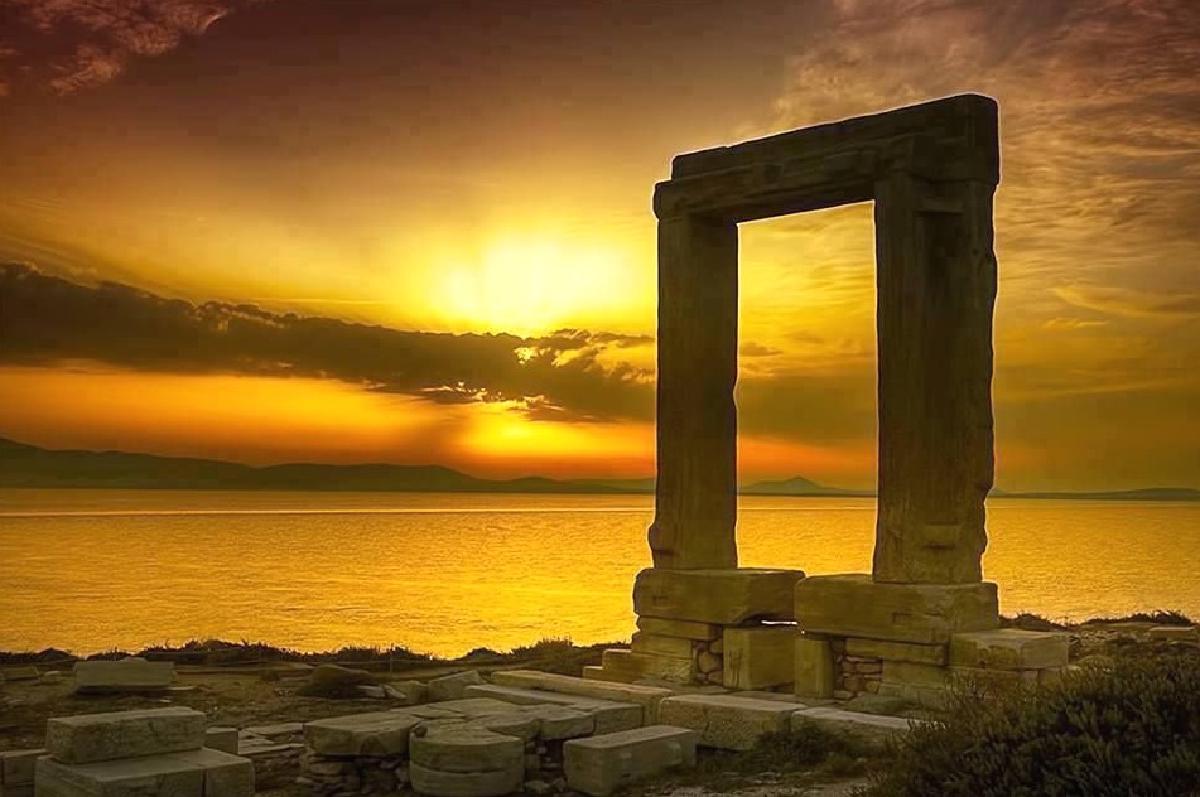
This is the island where you eat cheese made that morning from a farmer who lives up the road, swim on beaches so long you can always find your own stretch of sand, and hike through marble villages in mountains that actually have trees. The Portara — that massive marble doorframe on the peninsula at sunset — is just the opening act.
Getting from Athens to Naxos is easy. Multiple daily ferries, a short flight option, and a port arrival that drops you right into Naxos Town. Here’s how to plan it.
Quick Comparison: Ferry vs Flight#
| Ferry | Flight | |
|---|---|---|
| Travel time | 3.5-5.5 hours | 45 minutes |
| Price range | €35-65 | €60-180 |
| Frequency | 3-5 daily (summer) | 1-2 daily (summer) |
| Best for | Most travelers | Time-constrained trips |
| Departs from | Piraeus or Rafina port | Athens Airport (ATH) |
| Arrives at | Naxos Town port | Naxos Airport (JNX) |
| Booking needed? | Yes for July-August | Yes, always book ahead |
Ferry from Athens to Naxos#
The ferry is how the vast majority of people reach Naxos, and the route is well-served — especially in summer. Naxos sits just past Paros on most Cycladic ferry routes, so it benefits from high-frequency service.
Ferry Types and What to Expect#
High-speed ferries (3.5-4 hours) Fast catamarans and jet ferries from SeaJets, Hellenic Seaways, and Golden Star Ferries. Air-conditioned cabins, assigned seating, a small snack bar. These boats are efficient but can feel claustrophobic — you’re stuck inside, and when the meltemi wind blows in July and August, the ride gets bumpy.
Price: €50-65 one way.
Conventional ferries (5-5.5 hours) Blue Star Ferries runs the workhorse conventional route. These are proper ships — outdoor decks, a restaurant, a bar, lounge areas with views. The crossing takes longer, but you’re not watching the clock. You’re watching the Aegean. The ship usually stops at Paros before continuing to Naxos, adding 20-30 minutes to the journey.
Price: €35-45 one way (deck/economy class).
Which Port: Piraeus or Rafina?#
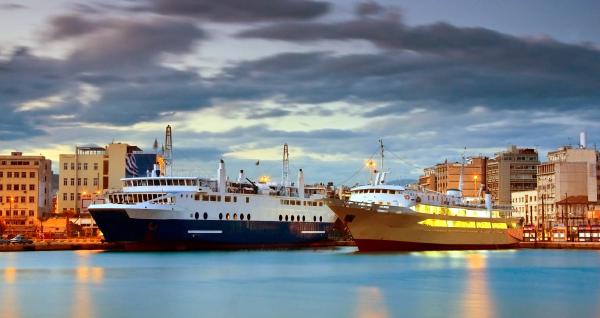
Piraeus handles the bulk of Naxos-bound ferries. It’s connected to Athens city center by metro (Line 1, green line — about 45 minutes from Syntagma). Most departures leave between 7:00-8:00 AM, with additional afternoon sailings in summer.
Rafina occasionally has high-speed service to Naxos, but departures are fewer and schedules less reliable. It’s closer to Athens Airport (20 minutes by car) but awkward from the city center (about 1 hour by KTEL bus from Pedion Areos).
Bottom line: Piraeus unless you’re coming directly from the airport.
Getting to Piraeus Early#
Morning ferries leave around 7:00-7:30 AM. You need to be at the port by 6:30 AM. Options:
- Metro: Line 1 (green) to Piraeus station. First trains around 5:30 AM from central Athens. Allow 45-60 minutes from Syntagma or Monastiraki.
- Taxi/Uber: €15-20 from central Athens, 25-35 minutes. The most reliable option for early departures.
- Stay near Piraeus the night before: A handful of decent hotels near the port take the stress out of catching that 7 AM boat. Not glamorous, but effective.
Schedule and Booking#
Peak season (June-September): expect 3-5 daily departures to Naxos from Piraeus. In winter, that drops to 1-2 per day, sometimes via Paros only.
Book your ferry on Ferryhopper — compare all operators and schedules side by side, and book with a mobile ticket. No printing, no queuing at port offices.
The main operators on the Piraeus–Naxos route:
- Blue Star Ferries — conventional, daily year-round, most reliable
- SeaJets — high-speed catamarans, fastest option
- Hellenic Seaways — fast boats, good summer coverage
- Golden Star Ferries — high-speed, often the cheapest fast option
Arriving in Naxos by Ferry#
Ferries dock at Naxos Town (Chora) port, right at the island’s main town. You literally step off the boat into the heart of things — the old town, the waterfront, restaurants, and hotels are all within walking distance.
The Portara — the iconic marble gateway of the unfinished Temple of Apollo — is visible from the ferry as you pull in. It’s one of the best arrivals in the Greek islands.
From the port:
- On foot: Naxos Town is compact. Most town hotels are a 5-15 minute walk from the dock.
- Bus: KTEL buses connect to major beach towns and villages. Buses to Agios Prokopios, Agia Anna, and Plaka leave regularly in summer (~€2).
- Taxi: Available at the port. €10-15 to Agios Prokopios, €15-20 to Plaka. Limited supply — don’t assume you’ll find one instantly in August.
- Rental car: Pick up from Naxos Town. Pre-book in summer. Highly recommended if you plan to explore the interior villages and mountain roads.
Flight from Athens to Naxos#
Naxos Airport (JNX) is small — a single runway, one terminal building, walk-to-the-plane boarding. But it works.
Airlines and Prices#
- Olympic Air (by Aegean) — The primary carrier. Turboprop planes, about 45 minutes. Prices: €60-150 one way.
- Sky Express — Regional alternative, similar aircraft and times. Prices: €55-130 one way.
Summer frequency: 1-2 flights daily. Winter: sporadic, sometimes none for stretches.
When Flying Makes Sense#
For Naxos, the ferry wins in most scenarios. The high-speed ferry takes under 4 hours, and when you add airport overhead (check-in, security, the 20-minute transfer from Naxos Airport to town), flying saves you maybe an hour.
Fly if:
- You’re connecting from an international flight into Athens and can’t make a same-day ferry
- The meltemi has cancelled ferries (it happens in July-August)
- You genuinely cannot handle boats
Otherwise, take the ferry. It’s cheaper, more scenic, arrives at a better location (port vs airport), and has far more scheduling flexibility.
What to Do When You Get to Naxos#
Naxos is bigger than you think — the largest island in the Cyclades at 430 km². You could spend a week here and not run out of things to do, and the variety is what sets it apart from the smaller, more one-note Cycladic islands.
Naxos Town (Chora): Where You Start#
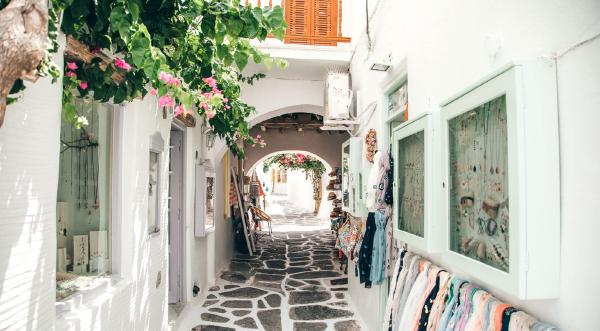
The port town is a destination in itself. Behind the waterfront, a maze of narrow streets climbs through the old Venetian Kastro — a medieval fortified quarter built by the Venetians in the 13th century, still inhabited, still atmospheric.
Don’t miss:
- The Portara — Walk out to the peninsula at sunset. The massive marble doorway of an unfinished 6th-century BC temple to Apollo is one of the most photographed spots in Greece, and for good reason. Sunset here is the real thing.
- The Venetian Kastro — Wander the stone streets of the upper town. The Archaeological Museum inside the Kastro is small but excellent.
- The waterfront tavernas — The harbor-front gets touristy, but one street back you’ll find places where locals actually eat. Ask for local Naxian cheese (graviera) and kitron, the island’s citron liqueur.
The Beaches#
Naxos has the best beaches in the Cyclades. That’s not opinion — the western coast from Agios Georgios down to Pyrgaki is an almost unbroken chain of sand beaches stretching for kilometers, with water ranging from shallow turquoise to deep blue.
Best beaches by vibe:
- Agios Prokopios — Regularly voted one of the best beaches in Europe. Fine white sand, shallow turquoise water, organized with sunbeds on one end and free space on the other. 10 minutes from Naxos Town.
- Agia Anna — Just south of Agios Prokopios, slightly quieter. Excellent tavernas right on the beach. The kind of place where lunch stretches into the afternoon.
- Plaka — The long one. Over 4 km of sand, dunes, and cedar trees. The northern end has beach bars; keep walking south and you’ll have it to yourself. One of the best beaches in all of Greece.
- Mikri Vigla — Split into two beaches by a rocky headland. The south-facing side is calm; the north-facing side is wind-exposed and perfect for kitesurfing and windsurfing. Several schools for beginners.
- Pyrgaki — Remote, south coast. Quieter, less organized, beautiful. The drive down is part of the appeal.
- Aliko — Hidden behind cedar forests on the south coast. A couple of pristine coves, an abandoned hotel slowly being reclaimed by nature, and some of the clearest water on the island.
The Mountain Villages#
This is where Naxos diverges from every other Cycladic island. The interior is green, mountainous, and full of stone villages that feel centuries removed from the beach scene on the coast.
- Halki — The old commercial capital of Naxos, set in an olive grove-filled valley. Beautiful Venetian tower houses, the Vallindras Kitron Distillery (free tastings of the island’s signature citron liqueur), and several art galleries. A must-visit.
- Apiranthos — The most dramatic village. Built from gray marble, perched high on Mount Zas, with marble-paved streets and a fierce independent streak. Four small museums, excellent mountain tavernas, and views over the eastern coast.
- Filoti — The largest mountain village, at the base of Mount Zas. Starting point for the hike to the summit — at 1,004m, it’s the highest point in the Cyclades.
- Koronos — Tiny, remote, clinging to a steep hillside in the northeast. This is deep Naxos — almost no tourists, incredible hospitality, home-cooked food if you find the right kafeneio.
Food on Naxos#
Naxos is arguably the best food island in the Cyclades. Unlike the smaller islands that import most of their produce, Naxos is self-sufficient — potatoes, cheese, meat, citrus, olives, and wine are all produced locally.
What to try:
- Naxian graviera — Hard sheep’s milk cheese, one of Greece’s best. You’ll find it on every menu, grilled or in salads.
- Naxian potatoes — Famous across Greece. Seriously. Fried, roasted, in any form — they’re different here.
- Kitron — A liqueur made from the leaves of the citron tree, produced only on Naxos. Three varieties: green (sweet), yellow (medium), clear (strong and dry). Visit the Vallindras Distillery in Halki for a free tasting.
- Local meat dishes — Naxos raises its own livestock. Lamb and goat are exceptional, especially slow-cooked in village tavernas.
Budget and Booking Timing#
| Expense | Budget | Mid-range | Comfortable |
|---|---|---|---|
| Ferry (one way) | €35 (conventional) | €50 (high-speed) | €65 (high-speed, reserved seat) |
| Accommodation/night | €40-60 | €80-130 | €150-250+ |
| Meals/day | €20-30 | €35-55 | €60+ |
| Car rental/day | — | €35-50 | €50-70 |
When to book:
- Ferries: 1-2 weeks ahead for July-August. Flexible in shoulder season.
- Hotels: 1-2 months ahead for July-August if you want specific places in Agios Prokopios or Naxos Town. Shoulder season is more relaxed.
- Car rental: Book ahead for summer. Naxos is big enough that a car genuinely improves your trip.
Best Time to Visit Naxos#
| Season | Weather | Crowds | Prices | Ferry Frequency |
|---|---|---|---|---|
| Peak (Jul-Aug) | Hot, 30-35°C, meltemi winds | Busy, especially beaches | Highest | 4-5 daily |
| Shoulder (May-Jun, Sep-Oct) | Warm, 22-28°C, calm seas | Pleasant, room to breathe | Moderate | 3-4 daily |
| Off-season (Nov-Apr) | Cool, 12-18°C, rain possible | Very quiet, many places closed | Lowest | 1-2 daily |
Naxos as an Island-Hopping Base#
Naxos sits next to Paros in the central Cyclades, which gives you direct ferry connections to most of the island group:
- Paros — 30-45 minutes, multiple daily (the easiest hop)
- Santorini — 2-3 hours by fast ferry
- Mykonos — 1.5-2 hours by fast ferry
- Ios — 1-1.5 hours
- Amorgos — 1.5-3 hours (the gateway to the Small Cyclades)
- Koufonisia — 1-2 hours (tiny island paradise, increasingly popular)
The Naxos-Paros connection is so frequent that some people stay on one island and day-trip to the other. If you’re building a multi-island route, combining Naxos and Paros is the most logical pairing in the Cyclades.
Check all Naxos ferry connections on Ferryhopper — map out your island-hopping itinerary and book connecting ferries in one go.
Frequently Asked Questions#
How long does the ferry from Athens to Naxos take?#
High-speed ferries take 3.5-4 hours. Conventional ferries (Blue Star) take about 5-5.5 hours, usually stopping at Paros along the way. Both depart from Piraeus. The conventional boat costs about €15-20 less and gives you a much more enjoyable crossing with outdoor decks and room to move around.
Is Naxos better than Paros?#
They’re complementary more than competitive. Naxos wins on beaches (longer, more varied), food (locally sourced everything), and nature (mountains, hiking, green interior). Paros wins on nightlife (Naoussa), atmosphere (more cosmopolitan), and convenience (slightly faster ferry from Athens). They’re 30 minutes apart by ferry — do both if you can. Read our Athens to Paros guide for the comparison.
Can I do Naxos as a day trip from Athens?#
Not really. The round trip alone is 7-11 hours of ferry time. Naxos deserves at least 3-4 nights — it’s big enough that you’d feel rushed with less. If you want a day trip island from Athens, consider the Saronic islands instead.
Do I need a car on Naxos?#
More than on most Cycladic islands, yes. KTEL buses connect the western beach towns and a few mountain villages, but service is limited. A car opens up the interior villages (Halki, Apiranthos, Koronos), remote beaches on the south coast, and the freedom to beach-hop at your own pace. If you’re only staying in Naxos Town or Agios Prokopios and are happy with buses, you can manage — but a car genuinely improves the experience here.
What about the meltemi wind?#
The meltemi blows from the north, primarily in July and August. On Naxos, it means the north-facing beaches (like the north side of Mikri Vigla) get waves and wind — great for kitesurfing, less great for swimming with small children. The south-facing and western beaches stay calmer. The meltemi can also cancel high-speed ferry service; conventional Blue Star ferries handle rough seas better.
Related Guides#
Planning your trip from Athens to Naxos? These will help:
- Athens to Paros — Naxos’s neighbor, 30 minutes away by ferry
- Island Hopping from Athens — plan a multi-island Cyclades route
- Athens to Crete — the other major island ferry route
- Athens Airport to City Center — getting into Athens before heading to the port
- Athens to Santorini — the classic Cyclades connection
- 3 Days in Athens Itinerary — what to do in Athens before you sail
- Best Day Trips from Athens — more excursion ideas beyond the islands