Paros sits right in the middle of the Cyclades, which is exactly why so many people end up there — either on purpose or as a jumping-off point for the surrounding islands. But here’s the thing: once you arrive, most visitors quietly abandon their island-hopping plans and stay put.
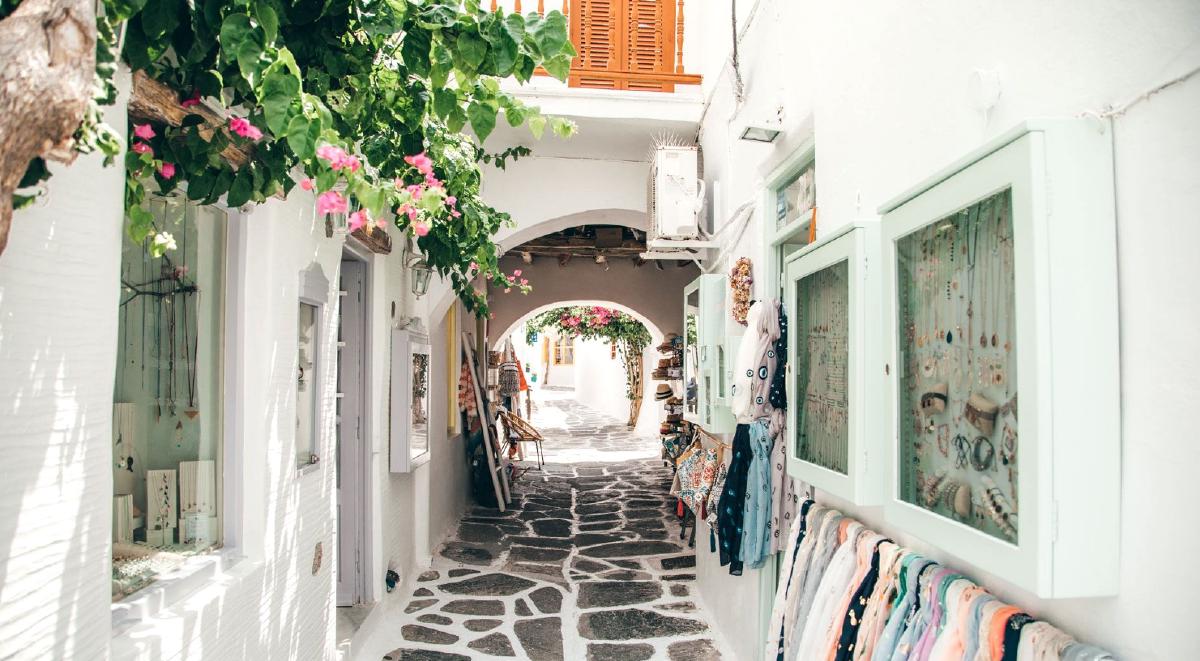
It’s that kind of island. Naoussa’s fishing harbor at golden hour, the backstreets of Parikia with bougainvillea tumbling over white walls, beaches where the water is absurdly clear and somehow nobody’s claimed your stretch of sand. Paros delivers the full Cycladic dream without the Santorini price tags or the Mykonos crowds.
Getting there from Athens is straightforward. Here’s how to plan it.
Quick Comparison: Ferry vs Flight#
| Ferry | Flight | |
|---|---|---|
| Travel time | 3-5 hours | 40 minutes |
| Price range | €30-60 | €55-170 |
| Frequency | 4-6 daily (summer) | 2-3 daily (summer) |
| Best for | Most travelers, flexible schedules | Time-limited trips |
| Departs from | Piraeus or Rafina port | Athens Airport (ATH) |
| Arrives at | Parikia Port, Paros | Paros Airport (PAS) |
| Booking needed? | Yes for July-August | Yes, always book ahead |
Ferry from Athens to Paros#
The ferry is the way most people get to Paros, and Paros is one of the better-connected Cycladic islands — multiple daily departures, both fast and conventional boats, and a manageable crossing time that doesn’t eat your whole day.
Ferry Types and What to Expect#
High-speed ferries (3-3.5 hours) Catamarans and fast boats operated by SeaJets, Hellenic Seaways, and Golden Star Ferries. Air-conditioned, assigned seating, a small café on board. The ride is smooth in calm weather, but these boats bounce around more than the big ones when the meltemi wind picks up.
Price: €45-60 one way.
Conventional ferries (4-5 hours) Blue Star Ferries runs the main conventional route. These are the big ships — multiple decks, outdoor lounges, a proper restaurant, a bar, and enough space to wander around. The extra hour or two gives you time to eat breakfast on deck watching the Aegean slide by, which is honestly one of the better mornings you’ll have in Greece.
Price: €30-40 one way (deck/economy class).
Which Port: Piraeus or Rafina?#
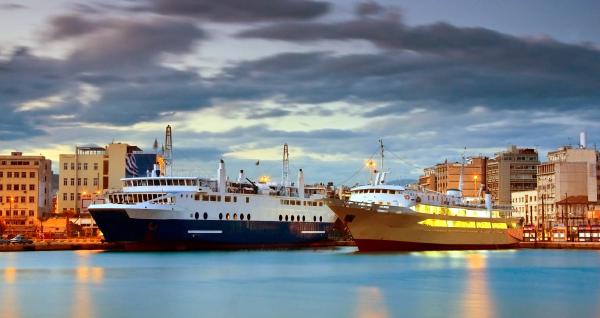
Piraeus is where the majority of Paros ferries leave from. It’s connected to central Athens by metro (Line 1, green line — about 45 minutes from Syntagma). Most departures cluster in the morning between 7:00-8:00 AM, with additional afternoon and evening sailings in summer.
Rafina has some high-speed departures, usually fewer per day. It’s closer to Athens Airport (20 minutes by car) but farther from the city center (about 1 hour by KTEL bus from Pedion Areos). Only makes sense if you’re coming straight from the airport.
Bottom line: Use Piraeus unless you’re literally at the airport.
Getting to Piraeus Early#
The first ferries leave around 7:00-7:30 AM, which means you need to be at Piraeus by 6:30 AM. Your options:
- Metro: Line 1 (green) to Piraeus station. First trains run around 5:30 AM from central Athens. Allow 45-60 minutes from Syntagma or Monastiraki.
- Taxi/Uber: €15-20 from central Athens, 25-35 minutes depending on traffic. The most reliable option for early departures.
- Stay near Piraeus the night before: There are decent hotels near the port if you want zero stress. Not the most exciting neighborhood, but it solves the alarm-clock problem.
Schedule and Booking#
In peak season (June-September), expect 4-6 daily departures to Paros from Piraeus. In winter, that drops to 1-2 per day.
Book your ferry on Ferryhopper — it shows all operators, compares prices and schedules side by side, and the booking process is painless. You get a mobile ticket, so no printing needed.
The major operators on the Piraeus-Paros route:
- Blue Star Ferries — conventional, most reliable, daily year-round
- SeaJets — high-speed catamarans, fastest crossing
- Hellenic Seaways — mix of fast boats
- Golden Star Ferries — high-speed, competitive pricing
Arriving in Paros by Ferry#
All ferries dock at Parikia Port, right in the island’s main town. This is already a win — unlike some islands where you dock in the middle of nowhere, Parikia is walkable. The town center, waterfront restaurants, and many hotels are within a 5-15 minute walk from the ferry terminal.
If you’re heading elsewhere on the island:
- Bus: KTEL buses meet ferry arrivals. Connections to Naoussa (20 min, ~€2), Lefkes, Piso Livadi, and major beaches. Reliable and cheap.
- Taxi: Available at the port. €15-20 to Naoussa, €20-25 to south coast beaches. Limited supply in summer — don’t count on grabbing one instantly.
- Rental car/ATV: Pick up from Parikia. Pre-book for summer. A car gives you the most freedom, especially for beach-hopping on the south coast.
Flight from Athens to Paros#
Paros has a small airport (PAS), and the Athens–Paros route operates year-round with increased summer frequency.
Airlines and Prices#
- Olympic Air (by Aegean) — The main operator. Turboprop aircraft, about 40 minutes. Prices: €55-130 one way.
- Sky Express — Regional carrier, similar aircraft and times. Prices: €50-120 one way.
Flights are less frequent than the ferry options (2-3 daily in summer, 1 in winter), and the airport is tiny — one gate, no jetway, walk across the tarmac.
When Flying Makes Sense#
Honestly? Not often for Paros. The ferry is already under 4 hours for the fast boats, and by the time you factor in airport check-in, security, baggage claim, and the transfer from Paros Airport to wherever you’re staying, the time savings over a high-speed ferry is minimal.
Fly if:
- You’re connecting same-day from an international flight into Athens and can’t make a ferry
- Sea conditions are predicted to be rough (meltemi season, July-August)
- You physically cannot do boats
Otherwise, ferry. It’s cheaper, more flexible, the Parikia port arrival is more convenient than the airport, and you actually enjoy the journey.
What to Do When You Get to Paros#
This is the part where Paros quietly steals your heart. The island divides into a few distinct zones, and you can cover the highlights in 3-4 days — though a week disappears faster than you’d expect.
Parikia: The Main Town#
Parikia is where the ferry drops you, and it’s worth more than just a pass-through. The old town behind the waterfront is a labyrinth of whitewashed alleys, stone archways, and tiny churches tucked into corners. Get lost in it on purpose.
Don’t miss:
- Panagia Ekatontapiliani (Church of 100 Doors) — One of the oldest and most impressive Byzantine churches in Greece, dating to the 4th century. It’s right in town and free to enter.
- The Frankish Castle — Built from repurposed ancient marble (look closely and you’ll spot column drums embedded in the walls). Climb up at sunset.
- The waterfront — Tavernas, cafés, and a crescent of fishing boats. The evening promenade (volta) here is peak Greek island life.
Naoussa: Where Everyone Wants to Be#
A 20-minute bus ride north from Parikia, Naoussa is Paros’s most photogenic town and the island’s social center. The old fishing harbor — tiny boats, colorful doors, octopus drying on lines — is one of those scenes that looks staged but isn’t.
What to do here:
- Wander the harbor at sunset — every angle is a photograph
- Eat at the small tavernas behind the port (away from the waterfront tourist menus)
- Visit the Venetian fortress ruins at the harbor entrance
- Explore the backstreets for boutiques and galleries
- Try Naoussa’s wine bars — Paros has a surprisingly good local wine scene, especially whites from the Monemvasia grape
The Beaches#
Paros has some of the best beaches in the Cyclades, and they range from organized party spots to quiet coves you’ll share with three other people.
Best beaches by vibe:
- Kolymbithres — The famous one. Smooth, sculpted granite boulders forming natural pools and inlets. Unlike any beach you’ve seen. North coast, reachable by boat from Naoussa or by road.
- Santa Maria — Long, sandy, crystal-clear water. Organized with sunbeds but also has free sections. Great for families.
- Golden Beach (Chrysi Akti) — The island’s longest stretch of sand, east coast. Kite- and windsurfing capital of Paros. Consistent wind, several schools for beginners.
- Logaras and Piso Livadi — South coast, quieter, excellent tavernas right on the sand. The kind of beach where you eat grilled fish with your feet near the water.
- Faragas — Sheltered cove, south coast. Calm water, some shade from tamarisk trees. Off the radar compared to the northern beaches.
Lefkes: The Mountain Village#
Perched in the island’s green interior, Lefkes is a marble-paved village surrounded by olive groves and hiking paths. It’s the Paros that existed before tourism — quiet, beautiful, and completely different from the coastal towns.
Walk the Byzantine Road, a centuries-old marble path that connects Lefkes to Prodromos village (about 40 minutes one way). It’s one of the best short hikes in the Cyclades.
Antiparos: The Easy Day Trip#
A 10-minute boat ride from Parikia (or drive to Pounta and take the car ferry, every 30 minutes), Antiparos is the island’s quieter, smaller neighbor. Main attractions:
- The cave of Antiparos — one of the oldest documented caves in Europe, with impressive stalactites
- Sifneiko beach — tiny, perfect
- The main village — one street, several excellent restaurants, zero rush
Best Time to Visit Paros#
| Season | Weather | Crowds | Prices | Ferry Frequency |
|---|---|---|---|---|
| Peak (Jul-Aug) | Hot, 30-35°C, windy (meltemi) | Busy, especially Naoussa | Highest | 5-6 daily |
| Shoulder (May-Jun, Sep-Oct) | Warm, 22-28°C, calm seas | Pleasant, not overwhelming | Moderate | 3-4 daily |
| Off-season (Nov-Apr) | Cool, 12-18°C, some rain | Very quiet, many places closed | Lowest | 1-2 daily |
Paros as an Island-Hopping Base#
Paros sits dead-center in the Cyclades, which makes it one of the best island-hopping bases in Greece. Direct ferries connect to:
- Naxos — 30-45 minutes, multiple daily (the easiest day trip or next stop)
- Santorini — 2-3 hours by fast ferry
- Mykonos — 1-1.5 hours by fast ferry
- Ios — 1.5-2 hours
- Milos — 2.5-3 hours
- Syros, Tinos, Sifnos — all reachable by direct ferry
If you’re planning a multi-island trip, routing through Paros saves backtracking and gives you the most scheduling flexibility.
Check all Paros ferry connections on Ferryhopper — you can map out a full island-hopping route and book connecting ferries in one go.
Frequently Asked Questions#
How long does the ferry from Athens to Paros take?#
High-speed ferries take 3-3.5 hours. Conventional ferries (Blue Star) take 4-5 hours. Both depart from Piraeus port. The time difference is worth considering against the price: conventional boats cost about €15-20 less and offer a more comfortable ride with outdoor deck access.
Is Paros or Naxos better?#
They’re different enough that the “better” answer depends on what you want. Paros is more polished, has better nightlife (especially Naoussa), and is easier for first-time island visitors. Naxos is bigger, has better beaches for families, more hiking, and a stronger local food scene. The good news: they’re 30 minutes apart by ferry, so you can easily visit both.
Can I do Paros as a day trip from Athens?#
Technically yes with an early morning high-speed ferry and a late evening return, but you’d spend 7+ hours on boats for maybe 5-6 hours on the island. Paros deserves at least 2-3 nights. If you only have one day for an island, look at closer options like the Saronic islands.
Do I need a car on Paros?#
Not strictly, but it helps. KTEL buses connect the main towns and beaches, but service is limited in the evenings and doesn’t reach every beach. A car or ATV gives you freedom to explore the south coast and quieter spots. If you’re staying only in Naoussa or Parikia and don’t mind the bus schedule, you can manage without one.
What’s the ferry cancellation policy for bad weather?#
If your ferry is cancelled due to weather (usually strong meltemi winds in July-August), the ferry company will rebook you on the next available sailing or offer a full refund. High-speed ferries get cancelled more often than conventional ones — Blue Star’s big boats can handle rougher seas. Keep a flexible schedule in peak meltemi season.
Related Guides#
Planning your trip from Athens to Paros? These will help:
- Island Hopping from Athens — plan a multi-island route through the Cyclades
- Athens to Santorini — the other big Cyclades ferry route
- Athens to Mykonos — fast ferry connections from Piraeus
- Athens Airport to City Center — getting into Athens before heading to the port
- 3 Days in Athens Itinerary — what to see in Athens before you sail
- Best Day Trips from Athens — more excursion ideas if Paros isn’t enough