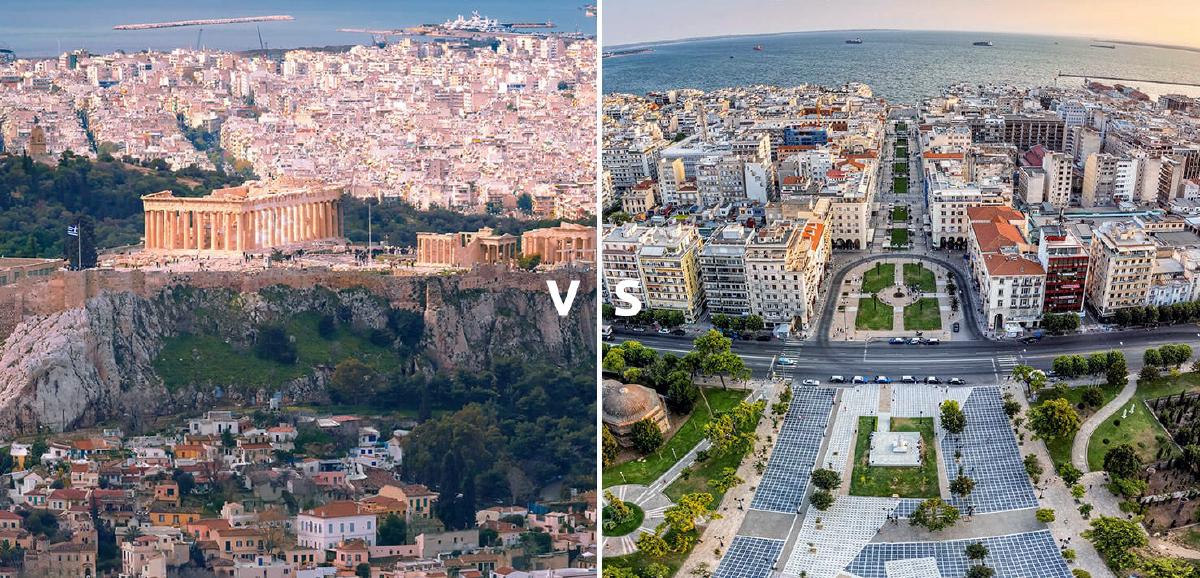
Here’s the thing most travel guides won’t tell you: Athens and Thessaloniki are not competing for the same traveler. They’re fundamentally different cities that happen to share a country, a language, and a love of grilled meat.
Athens is Greece’s ancient capital — monumental, tourist-ready, and built around the single most recognizable ruin on Earth. Thessaloniki is Greece’s second city — a university town with Ottoman-era neighborhoods, Byzantine churches on every corner, and a food scene that locals will argue is the best in the country.
Which one is right for your trip? That depends on what you’re after. Here’s an honest, category-by-category breakdown.
Quick Comparison#
| Category | Athens | Thessaloniki | Edge |
|---|---|---|---|
| Ancient history | Acropolis, Agora, 2,500+ years of ruins | Roman Forum, Rotunda, White Tower | Athens |
| Byzantine heritage | Some churches | Extraordinary — UNESCO World Heritage | Thessaloniki |
| Food | Excellent, tourist-friendly | Outstanding, arguably Greece’s best | Thessaloniki |
| Nightlife | Rooftop bars, late-night culture | Student bars, live music, Ladadika district | Thessaloniki |
| Budget | Slightly more expensive | Cheaper across the board | Thessaloniki |
| Beaches | Athenian Riviera, 30-40 min by tram | Halkidiki peninsula, 1-1.5 hours by car | Athens |
| Getting around | Metro, tram, compact center | Walkable, limited public transit | Tie |
| Day trips | Islands, Delphi, Peloponnese | Meteora, Vergina, Mount Olympus, Halkidiki | Tie |
| Crowds | Very busy in summer | Manageable year-round | Thessaloniki |
| Accommodation | €60-120/night midrange | €45-90/night midrange | Thessaloniki |
History & Sightseeing#
Both cities are ancient, but the history they offer is worlds apart.
Athens#
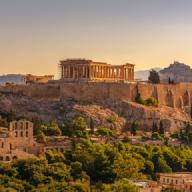
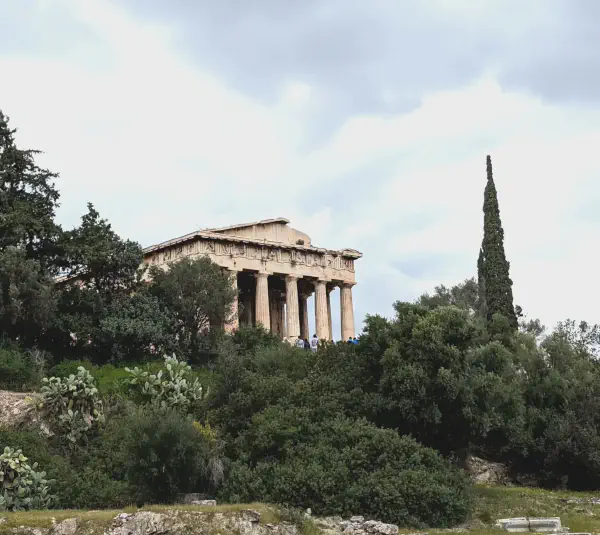
You already know what Athens has. The Acropolis dominates the skyline and the itinerary — and it should. The Parthenon, the Ancient Agora where Socrates debated, the Temple of Olympian Zeus, the Panathenaic Stadium where the first modern Olympics were held. Athens is the cradle of Western civilization, and walking through these sites, that’s not hyperbole. It’s geography.
The Acropolis Museum is world-class. The National Archaeological Museum holds treasures from across Greece. And the sheer density of ancient sites within the historic center means you can walk from one to the next in minutes.
See our Acropolis visiting guide and best museums guide.
Thessaloniki#
Thessaloniki doesn’t try to compete with Athens on ancient Greek history. Instead, it offers something Athens largely lacks: Byzantine heritage. The city has 15 UNESCO-listed Byzantine churches, some dating to the 5th century, with original mosaics and frescoes that rival anything in Ravenna or Istanbul.
The Rotunda — originally a Roman temple, then a church, then a mosque — is one of the most fascinating buildings in Greece. The White Tower on the waterfront is the city’s icon. The Roman Forum and Galerius Arch are impressive, though smaller in scale than Athens’ ancient sites.
What Thessaloniki does exceptionally well is lived-in history. The Ano Poli (Upper Town) neighborhood has Ottoman-era houses, Byzantine walls, and views across the Thermaic Gulf. It feels like a city that grew organically through centuries, rather than one built around a single archaeological site.
Verdict: History#
Athens wins for ancient Greek history, no contest — it’s the original, the source. Thessaloniki wins for Byzantine and Ottoman heritage. If you’re drawn to classical antiquity, Athens. If you want layered medieval history in an unpolished, authentic setting, Thessaloniki.
Food & Drink#
This is where things get interesting, because Thessaloniki has a genuine claim to Greece’s best food city.
Athens#
Athens’ food scene has improved enormously over the past decade. You’ll find excellent souvlaki and gyros on every block, outstanding seafood tavernas, creative modern Greek restaurants, and a growing international scene. Plaka and Psirri have the most tourist-friendly options. Monastiraki for late-night souvlaki. Koukaki and Pagrati for more local spots.
Prices are reasonable by European standards — €10-15 for a main course at a good taverna, €2-3 for street souvlaki.
See our food guide and best souvlaki spots.
Thessaloniki#
Thessaloniki’s food scene is something else. The city sits at a crossroads of Greek, Turkish, Balkan, and Sephardic Jewish culinary traditions. This produces flavors you won’t find anywhere else in Greece — bougatsa (flaky custard pie), koulouri (sesame bread rings eaten warm from street carts), mussels from the Thermaic Gulf, and spice-rich dishes that carry echoes of Constantinople.
The Modiano and Kapani markets are the city’s culinary heart — chaotic, aromatic, and far less touristy than anything in Athens. Small tavernas surround the markets, serving dishes that haven’t changed in generations.
The real difference: Thessaloniki’s average meal is better than Athens’ average meal. In Athens, you need to know where to go. In Thessaloniki, it’s harder to eat badly.
Prices are 15-25% cheaper than Athens. A full meal with wine at a good taverna runs €8-12 per person.
Verdict: Food#
Thessaloniki, fairly clearly. Athens has excellent food, especially if you follow local recommendations. But Thessaloniki’s culinary identity is deeper, more distinctive, and more consistent at every price point. If food is a major reason for your trip, Thessaloniki deserves serious consideration.
Nightlife#
Athens#
Athens’ nightlife starts late — don’t bother showing up before 11 PM — and revolves around rooftop bars with Acropolis views, the Psirri and Gazi districts for clubs and live music, and Koukaki for more relaxed wine bars. In summer, outdoor cinemas and beach clubs near Glyfada extend the scene. The energy is cosmopolitan with a strong local core.
See our nightlife guide.
Thessaloniki#
Thessaloniki might have Greece’s best nightlife per capita. It’s a university city with 100,000+ students, and that energy is everywhere. The Ladadika district (old warehouse quarter) has packed bars and tavernas. Valaoritou Street has craft cocktails and live music venues. The waterfront fills up on warm evenings with people drinking freddo espresso and watching the sunset.
The atmosphere is less polished than Athens, more spontaneous. Bars flow into streets. Music drifts between venues. Locals of all ages mix in the same spaces. It feels like a city that genuinely lives at night, not one performing nightlife for visitors.
Verdict: Nightlife#
Thessaloniki. Athens has great nightlife with more variety and more high-end options. But Thessaloniki’s bar culture is more accessible, more local, and more naturally social. If you want to meet Greeks your age over drinks, Thessaloniki makes it easier.
Budget#
Thessaloniki is cheaper than Athens across nearly every category.
| Expense | Athens | Thessaloniki |
|---|---|---|
| Mid-range hotel | €60-120/night | €45-90/night |
| Meal at taverna | €10-15 | €8-12 |
| Street food | €2-3 | €1.50-2.50 |
| Coffee | €3-4 | €2.50-3.50 |
| Beer (bar) | €5-6 | €3.50-5 |
| Museum entry | €10-20 | €4-8 (many free) |
Athens’ accommodation prices have risen significantly with tourism growth. Thessaloniki’s haven’t caught up yet, and the city has a large supply of quality mid-range hotels at genuinely affordable rates.
Verdict: Budget#
Thessaloniki, comfortably. You’ll spend 20-30% less on a comparable trip. For budget travelers, the difference is meaningful — a week in Thessaloniki costs roughly what five days in Athens costs.
Beaches#
Athens#
Athens has a real advantage here. The Athenian Riviera stretches south from the city, and you can reach beaches like Glyfada, Vouliagmeni, and Varkiza in 30-40 minutes by tram or bus. They’re not island-quality, but they’re clean, swimmable, and accessible without a car. Beach clubs near Athens offer a more upscale option.
See our Athens beaches guide.
Thessaloniki#
Thessaloniki’s waterfront is for walking, not swimming. The nearest proper beaches are on the Halkidiki peninsula, about 1-1.5 hours south by car. Halkidiki’s beaches are genuinely spectacular — turquoise water, white sand, the kind of coastline that looks photoshopped. But you need a car or an organized trip to reach them. That’s a meaningful barrier compared to Athens’ tram-to-the-beach convenience.
Verdict: Beaches#
Athens, clearly. If beach access matters, Athens delivers it without planning. Thessaloniki requires a dedicated day trip. (Though if you do make the trip, Halkidiki’s beaches are among Greece’s best.)
Getting Around#
Athens#
Athens has a three-line metro, tram to the coast, and extensive bus network. The historic center is compact and walkable. A single ticket costs €1.20. You’ll never need a car.
See our metro guide and taxi guide.
Thessaloniki#
Thessaloniki’s center is flat and walkable — you can cross most of the tourist area in 25 minutes on foot along the waterfront. Public transit is bus-only (the metro has been under construction for decades and partially opened in late 2024). Taxis are cheap. For Halkidiki or other day trips, you’ll want a rental car.
Verdict: Getting Around#
Slight edge to Athens for its metro system and tram. But Thessaloniki’s walkability means you won’t miss public transit much within the city center. The difference matters mostly for day trips, where Athens’ train connections are stronger.
Day Trips#
Athens#
- Delphi — Ancient oracle in the mountains (2.5 hours)
- Saronic Islands — Hydra, Aegina, Poros by ferry (1-2 hours)
- Cape Sounion — Temple of Poseidon at sunset (1 hour)
- Peloponnese — Nafplio, Mycenae, Epidaurus (1.5-2 hours)
- Meteora — Monasteries on rock pillars (4-5 hours, long but spectacular)
See our day trips guide.
Thessaloniki#
- Vergina — Royal tombs of Philip II, Alexander the Great’s father (1 hour)
- Meteora — Closer from Thessaloniki than Athens (2.5-3 hours)
- Halkidiki — Three peninsulas of beaches and villages (1-1.5 hours)
- Mount Olympus — Hike the home of the gods (1.5 hours to base)
- Pella — Birthplace of Alexander the Great (45 minutes)
Verdict: Day Trips#
Tie, but different flavors. Athens wins for island access and sheer variety. Thessaloniki wins for proximity to Meteora, Mount Olympus, and the Macedonian archaeological sites. Both are excellent bases for exploring northern or southern Greece respectively.
Who Should Choose Athens#
Athens is the better choice if you:
- Are visiting Greece for the first time — the Acropolis, Plaka, and the islands nearby give you the “Greece experience” most people picture
- Want beach access — swim in the Aegean without leaving the city
- Love classical ancient history — the birthplace of democracy, philosophy, and Western theater
- Plan to island-hop — Athens is the natural hub for ferries to Mykonos, Santorini, Crete, and beyond
- Want established tourism infrastructure — more English spoken, more tours, more guides
Plan your stay with our 3-day Athens itinerary and where to stay guide.
Who Should Choose Thessaloniki#
Thessaloniki is the better choice if you:
- Are a foodie — Thessaloniki’s culinary scene is deeper, cheaper, and more distinctive
- Have been to Athens already — Thessaloniki shows you a completely different side of Greece
- Prefer less-touristy cities — fewer crowds, more local character, real neighborhood life
- Love Byzantine and Ottoman history — 15 UNESCO churches, the Upper Town, layered medieval heritage
- Are on a tight budget — 20-30% cheaper than Athens with no drop in quality
- Want great nightlife — student city energy, packed bars, live music, spontaneous atmosphere
Why Not Both?#
If you have 10+ days in Greece, doing both is easy and highly recommended. Direct flights between Athens and Thessaloniki take just 55 minutes and often cost €25-60 on Aegean Airlines or SKY express. Alternatively, the train takes about 4 hours and is comfortable and scenic.
Suggested routes:
Option A: 4 days Athens → fly/train to Thessaloniki → 3 days Thessaloniki → day trip to Meteora or Halkidiki
Option B: 3 days Thessaloniki → train to Athens → 4 days Athens → ferry to the islands
Either way, the combination gives you the full spectrum of Greece — ancient and Byzantine, capital city and university town, tourist-ready and authentically local.
Frequently Asked Questions#
Is Athens or Thessaloniki better for first-time visitors to Greece?#
Athens, for most people. The Acropolis is a bucket-list experience, the tourism infrastructure is stronger, and it connects easily to the Greek islands. But if your priority is food and local culture over major sightseeing, Thessaloniki is an excellent alternative — and increasingly popular as a first-time destination.
Which city has better food — Athens or Thessaloniki?#
Thessaloniki has a strong claim to Greece’s best food city. Its culinary traditions blend Greek, Turkish, Balkan, and Sephardic influences, and the average meal quality is remarkably high. Athens has excellent food too, especially with recent restaurant openings, but you need to know where to go. In Thessaloniki, it’s hard to eat badly.
Is Thessaloniki cheaper than Athens?#
Yes, by roughly 20-30%. Accommodation, food, drinks, and attractions all cost less. The gap is widening as Athens’ tourism-driven prices climb. For budget-conscious travelers, the savings in Thessaloniki are significant — potentially hundreds of euros over a week.
How do I get from Athens to Thessaloniki?#
Three main options: fly (55 minutes, €25-60 on Aegean Airlines or SKY express), train (about 4 hours on the Hellenic Train, scenic route, €25-45), or drive (5 hours via the E75 motorway). The flight is fastest; the train is the most enjoyable.
Can I visit Meteora from Thessaloniki?#
Yes, and it’s closer from Thessaloniki than Athens. Kalambaka (the base town for Meteora) is about 2.5-3 hours by car or train from Thessaloniki, versus 4-5 hours from Athens. A day trip is very doable, though an overnight stay lets you catch sunrise over the monasteries.
The Bottom Line#
Choose Athens if: You want the iconic Greece experience — the Acropolis, island connections, beach access, and the world-famous sites you’ve seen in every documentary. Athens delivers a spectacular trip, especially for first-timers.
Choose Thessaloniki if: You want to eat extraordinarily well, drink in packed local bars, explore Byzantine churches without crowds, and spend less money doing all of it. Thessaloniki is for the traveler who’s moved past checking boxes and wants to feel a city from the inside.
The honest truth: Athens is the more complete tourist destination. Thessaloniki is the more complete city experience. First-time visitors to Greece should probably start with Athens. Repeat visitors — or travelers who prioritize food, local culture, and value — should absolutely put Thessaloniki on the list.
And if you can swing both? A week split between Athens and Thessaloniki shows you two sides of Greece that most tourists never see together.
Planning your Athens trip? Start with our 3-day Athens itinerary, where to stay guide, and things to do in Athens.