I thought I knew Greek food before I visited Athens. Moussaka, gyros, maybe some feta. That was about the extent of it. Then someone sat me down at a taverna in Koukaki, ordered a dozen dishes I’d never heard of, and basically rebuilt my understanding of what this cuisine actually is.
Greek food goes so much deeper than the greatest hits. The cuisine draws on 4,000 years of history, some of the best ingredients in the Mediterranean, and a philosophy that food exists to be shared with people you like — ideally with wine, slowly, and late at night.
Here’s everything you should eat in Athens, how to pronounce it, and where to find the best versions.
The Essentials: Top 10 Must-Try#
Before your trip ends, make sure you’ve had these. I’m genuinely serious about all ten.
- Souvlaki — Grilled meat in pita (the perfect street food, and I could eat it daily)
- Moussaka — Layered eggplant, spiced meat, creamy béchamel
- Greek salad (Horiatiki) — With a thick slab of real feta, not crumbled
- Grilled octopus — Charred, tender, with just lemon and olive oil
- Tzatziki — Yogurt, cucumber, garlic. Simple and addictive.
- Fava — Yellow split pea puree (not fava beans, confusingly)
- Spanakopita — Spinach and feta in flaky phyllo
- Pastitsio — Greek “lasagna” that deserves its own fan club
- Loukoumades — Honey-drenched donuts. Dangerous.
- Greek coffee — Strong, thick, ritualistic
Street Food & Quick Bites#
Souvlaki (soo-VLAH-kee)#
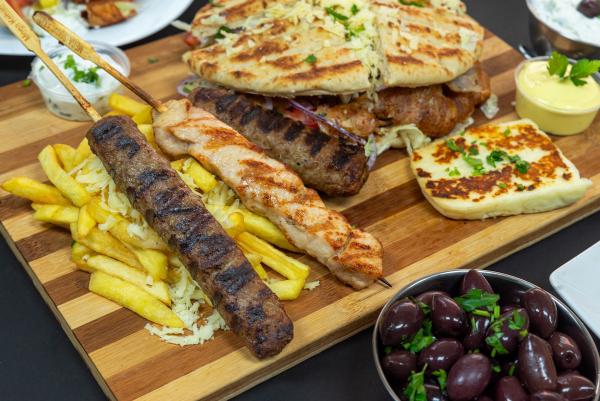
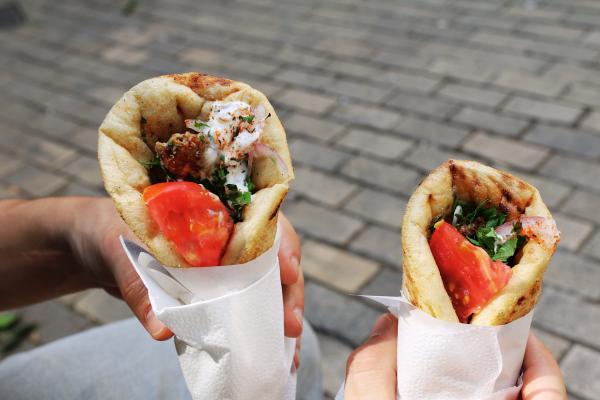
What: Small pieces of pork, chicken, or lamb grilled on a skewer, served in pita bread with tomato, onion, tzatziki, and — this is crucial — fries stuffed inside the pita. Yes, fries IN the pita. It’s genius.
Where: Kostas (Syntagma) for the best in central Athens, O Thanasis (Monastiraki) for a classic
Pro tip: When ordering, they’ll ask “apo ola?” — meaning “with everything?” The correct answer is always yes.
Gyros (YEE-ros)#
What: Meat (usually pork) shaved from a vertical rotisserie, served in pita with toppings. Similar to souvlaki but the meat preparation is different.
The difference: Souvlaki = grilled on individual skewers. Gyros = shaved from a big rotating cone. Both are excellent; I slightly prefer souvlaki for the charred flavor.
Where: Any souvlaki shop. Yes, gyros shops also sell souvlaki and vice versa. Don’t overthink it.
Tiropita (tee-ROH-pee-tah)#
What: Cheese pie — flaky phyllo dough filled with salty feta and sometimes other cheeses. The ultimate €2 breakfast or snack.
Where: Any bakery (fournos). Best eaten warm, straight from the oven. Every neighborhood has at least one bakery, usually more.
Variation: Spanakopita is the spinach-and-feta version. Also excellent.
Koulouri (koo-LOO-ree)#
What: Circular bread ring covered in sesame seeds. Classic Athens breakfast — simple, cheap, and sold from street carts everywhere.
Where: Street vendors all over the city, especially mornings. Pair with a Greek coffee and you’ve got breakfast for under €2.50.
Price: €0.50-1. Possibly the best-value food in Europe.
Loukoumades (loo-koo-MAH-des)#
What: Fried dough balls drizzled with honey and cinnamon. Essentially Greek donuts, and every bit as dangerous as that sounds.
Where: Lukumades in Monastiraki has turned these into an art form — they do versions with chocolate, ice cream, crushed pistachios. I still think the classic honey and cinnamon is the best.
Main Dishes (Taverna Classics)#
Moussaka (moo-sah-KAH)#
What: Layers of eggplant, spiced ground meat, and creamy béchamel sauce, baked until golden and bubbling. Greece’s most famous comfort food.
Where: Every traditional taverna has moussaka, but quality varies wildly. The difference between homemade and reheated-from-frozen moussaka is night and day. Go where locals eat.
Pastitsio (pah-STEE-tsyo)#
What: Often called “Greek lasagna” — layers of tubular pasta, meat sauce, and béchamel. Like moussaka’s underrated sibling. I actually prefer it some days.
Where: Traditional tavernas, especially the no-frills neighborhood kind. This is home cooking, not fine dining.
Stifado (stee-FAH-doh)#
What: Rich beef or rabbit stew with pearl onions, tomato sauce, and warming spices like cinnamon and allspice. The kind of dish that makes you close your eyes when you taste it.
When: More common in cooler months. The ultimate Athens winter comfort food.
Lamb Chops (Paidakia)#
What: Grilled lamb chops, simply seasoned with olive oil, lemon, and oregano. Greek cooking at its finest — fantastic ingredients, minimal intervention.
Where: To Steki tou Ilia in Koukaki is legendary for these. People line up, and they should.
Gemista (yeh-mee-STAH)#
What: Tomatoes and peppers stuffed with herbed rice, sometimes with a bit of meat. Classic summer dish when tomatoes are at their peak.
When: Best in summer when the tomatoes are ridiculous. It’s a dish that lives or dies by its ingredients.
Seafood#
Grilled Octopus (Htapodi)#
What: Whole octopus tentacles, charred on the grill, drizzled with olive oil and lemon. One of the simplest and most perfect things you’ll eat in Greece.
Where: Any decent seafood taverna. The best versions are barely seasoned — just fire, oil, and lemon. Don’t order it anywhere that seems like it might have come from a freezer.
Fried Calamari (Kalamarakia)#
What: Squid rings, lightly battered and fried until crispy. Served with lemon.
Where: Everywhere, but quality varies. Good calamari is tender inside and shatteringly crisp outside. Bad calamari is rubber bands in breadcrumbs. You’ll know the difference immediately.
Fresh Fish (Psaria)#
What: Whole grilled fish — sea bream (tsipoura), sea bass (lavraki), or whatever the fisherman brought in that day.
Note: Fish is priced by weight (per kilo) in Greece. Always ask the price before ordering, or you might end up with a €60 surprise. Not that I’d know anything about that.
Mezedes (Small Plates)#
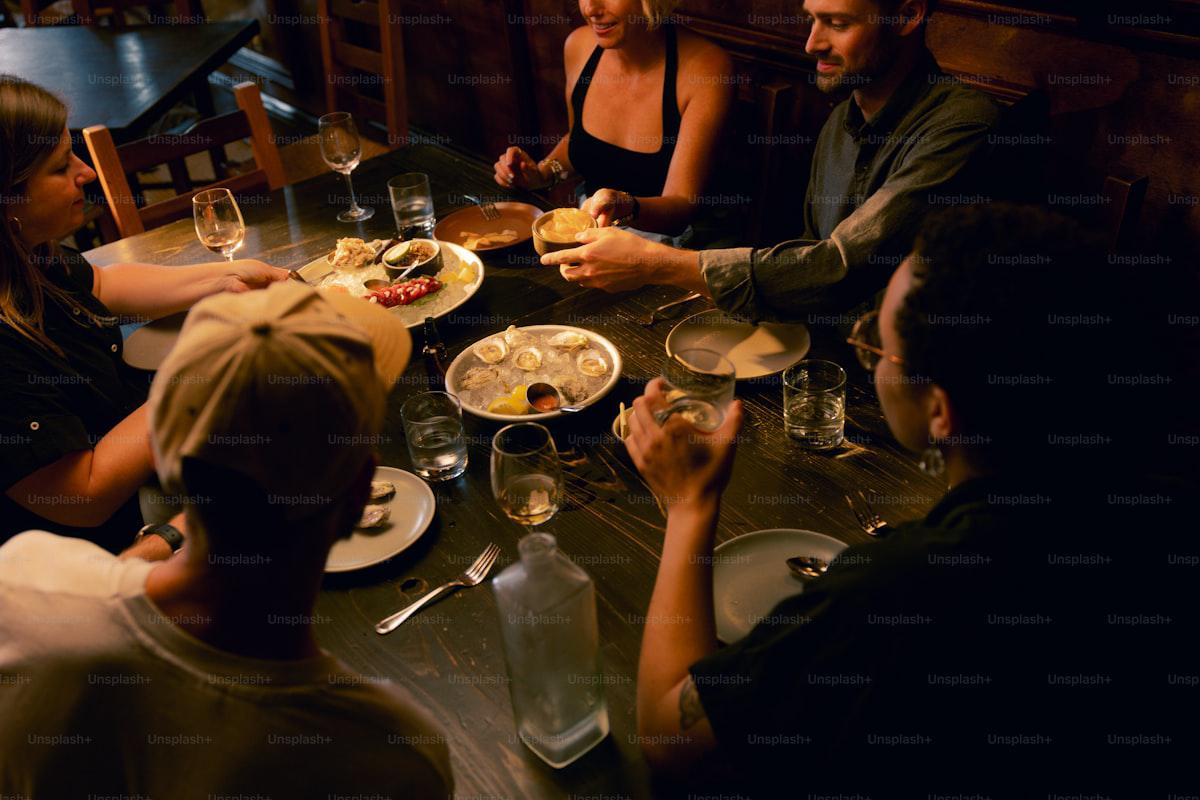
This is where Greek dining really shines. Mezedes are small dishes meant for sharing — order a bunch, put them in the middle of the table, pass plates around, argue about which one is best. It’s the way Greeks eat, and once you try it, ordering individual entrées feels boring.
Tzatziki (tsah-TZEE-kee)#
What: Thick strained yogurt with grated cucumber, garlic, and olive oil. Cool, creamy, garlicky.
How to eat: Scoop with bread, use as a sauce for grilled meats. It goes with everything.
Fava (FAH-vah)#
What: Yellow split pea puree (confusingly, not actually fava beans). Creamy, smooth, topped with olive oil and raw onions. Sounds simple, tastes incredible. One of my surprise favorites.
Where: Traditional tavernas. The Santorini version is famous, but Athens tavernas do it beautifully too.
Taramosalata (tah-rah-moh-sah-LAH-tah)#
What: Fish roe dip, creamy and slightly briny.
Tip: Pink/orange versions use commercial coloring. White/cream versions are more traditional and usually better quality. Order the pale one.
Melitzanosalata (meh-lee-tzah-no-sah-LAH-tah)#
What: Smoky roasted eggplant dip. Similar to baba ganoush but distinctly Greek — chunkier, smokier, more character.
Saganaki (sah-gah-NAH-kee)#
What: Pan-fried cheese, golden and crispy outside, gloriously melty inside. Some places flambée it tableside with a shot of ouzo and a theatrical “Opa!” which is touristy but still fun.
Where: Tavernas. Goes perfectly with ouzo, which goes perfectly with more saganaki, which goes perfectly with more ouzo. You see the problem.
Dolmades (dol-MAH-des)#
What: Grape leaves stuffed with rice, herbs, and sometimes ground meat. Served warm or cold.
Varieties: Vegetarian versions with just rice and herbs are my preference. The herby, lemony filling is addictive.
Keftedes (kef-TEH-des)#
What: Greek meatballs — herb-seasoned, pan-fried, with a crispy exterior. Comfort food that transcends cultural boundaries.
Variation: Tomatokeftedes (tomato fritters) from Santorini are incredible if you see them on a menu — crispy, sweet, savory.
Salads#
Horiatiki (hoh-ree-AH-tee-kee)#
What: “Village salad” — the real Greek salad. Chunky tomatoes, cucumbers, onions, green peppers, Kalamata olives, and a thick slab of feta on top (never crumbled — that’s the tourist version). Dressed with olive oil and oregano.
The important detail: No lettuce. A real Greek salad has no lettuce. If your salad has lettuce, you’re in a tourist restaurant.
Marouli (mah-ROO-lee)#
What: Lettuce salad with fresh dill, spring onions, and lemon dressing. Light and refreshing.
When: A nice side dish, especially with grilled fish.
Sweets & Dessert#
Baklava (bah-klah-VAH)#
What: Layers of paper-thin phyllo dough with chopped nuts (walnut or pistachio), soaked in honey syrup. Rich, sweet, and one or two pieces is usually enough — though I never stop at two.
Where: Bakeries (zacharoplasteio). The ones near the Central Market tend to be excellent.
Galaktoboureko (gah-lak-toh-BOO-reh-ko)#
What: Silky vanilla custard wrapped in crispy phyllo pastry, soaked in lemon syrup. If you only try one Greek dessert, make it this one. It’s the sleeper hit of Greek pastry.
Where: Traditional bakeries.
Greek Yogurt with Honey#
What: Thick, creamy strained yogurt drizzled with local honey and sometimes topped with walnuts. Sounds simple because it is. Tastes like nothing you’ve had from a supermarket at home.
Where: Breakfast spots and cafes. The yogurt is thicker than what you’re used to.
Drinks#
Greek Coffee (Ellinikos Kafes)#
What: Strong, thick coffee prepared in a small pot called a briki. The grounds settle at the bottom — don’t drink those.
How to order:
- Sketo — No sugar (strong, not for beginners)
- Metrio — Medium sugar (my default)
- Glyko — Sweet
Tip: Sip it slowly. This is a 20-minute drink, not a gulp-and-go.
Freddo Cappuccino / Freddo Espresso#
What: A Greek invention — cold espresso shaken with ice until frothy, topped with cold milk foam. It’s everywhere in summer and is genuinely one of the best iced coffees I’ve had anywhere.
Where: Every single cafe in Athens. This is the national summer drink.
Ouzo (OO-zoh)#
What: Anise-flavored spirit. Clear until you add water, then it turns cloudy white. Tastes like licorice — you’ll either love it or you won’t.
How to drink: Always with water, always with ice, always alongside food (meze). Never on an empty stomach. That way leads to regret.
Tsipouro (tsee-POO-roh)#
What: Grape-based spirit, similar to Italian grappa. Some versions have anise, some don’t. Stronger than it seems.
Where: Tavernas, especially in northern Greek-style restaurants. Usually comes with a small plate of meze.
Retsina#
What: White wine flavored with pine resin. One of the most polarizing drinks in Greece — some people love the piney tang, others find it like drinking furniture polish. I’m in the love camp, personally.
Where: Traditional tavernas. Very Greek, very divisive, very cheap.
How to Order Like a Local#
At a Taverna#
- Order 4-6 mezedes (small plates) for the table to share
- Add 1-2 main dishes if you’re still hungry (you might not be)
- Get a horiatiki salad for the table
- Order house wine from the barrel — it’s cheap and usually decent
- Finish with Greek coffee or a sweet — never both (okay, sometimes both)
At a Souvlaki Shop#
- Choose your meat: pork (hirino), chicken (kotopoulo), or kebab
- Choose format: pita (wrapped) or plate (merida, with sides)
- Say “apo ola” (with everything) — trust the process
- Add drinks
Useful Phrases#
- “Ena souvlaki, parakalo” — One souvlaki, please
- “Apo ola” — With everything
- “Sketo” — Without sugar (for coffee)
- “Ton logariasmo, parakalo” — The bill, please
- “Efcharisto” — Thank you (they’ll appreciate the effort)
Frequently Asked Questions#
Is Greek food healthy?#
The traditional Mediterranean diet — olive oil, vegetables, fish, legumes, moderate wine — is consistently ranked among the healthiest in the world. Greeks have been eating this way for millennia, and it shows.
What about vegetarians?#
Greek cuisine has genuinely excellent vegetarian options: fava, Greek salad, stuffed vegetables, cheese pies, bean soups, grilled vegetables. It’s one of the easiest cuisines for vegetarians because the vegetable dishes aren’t afterthoughts — they’re main events.
Is Greek food spicy?#
No — Greek cooking is herb-forward (oregano, mint, dill, parsley) rather than chili-hot. If you don’t handle spice well, you’ll be completely comfortable here.
What’s the difference between a taverna and a restaurant?#
Taverna = casual, traditional, usually family-run, paper tablecloths. Restaurant (estiatorio) = more formal, printed menus, white tablecloths. Mezedopoleio = specializes in small plates and drinks. Honestly, I prefer tavernas nine times out of ten.
The Bottom Line#
Greek food rewards curiosity. The famous dishes are famous for good reason, but it’s the things you haven’t heard of — fava, galaktoboureko, tsipouro, the random meze plate your waiter insists you try — that’ll surprise you most.
Start with: Souvlaki, Greek salad, grilled octopus, tzatziki, loukoumades.
Graduate to: Fava, stifado, saganaki, lesser-known mezedes, barrel retsina.
Always remember: The best Greek meals involve sharing, time, and probably a bit more wine than you planned. That’s not a bug — that’s the feature.
Want to learn more? Pick up the Lonely Planet Greek Phrasebook to order like a local, or grab Rick Steves’ Greece guide for in-depth restaurant recommendations.
Ready to eat? Check out our guides to where to eat in Athens, best souvlaki, and food tours.