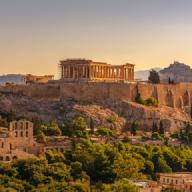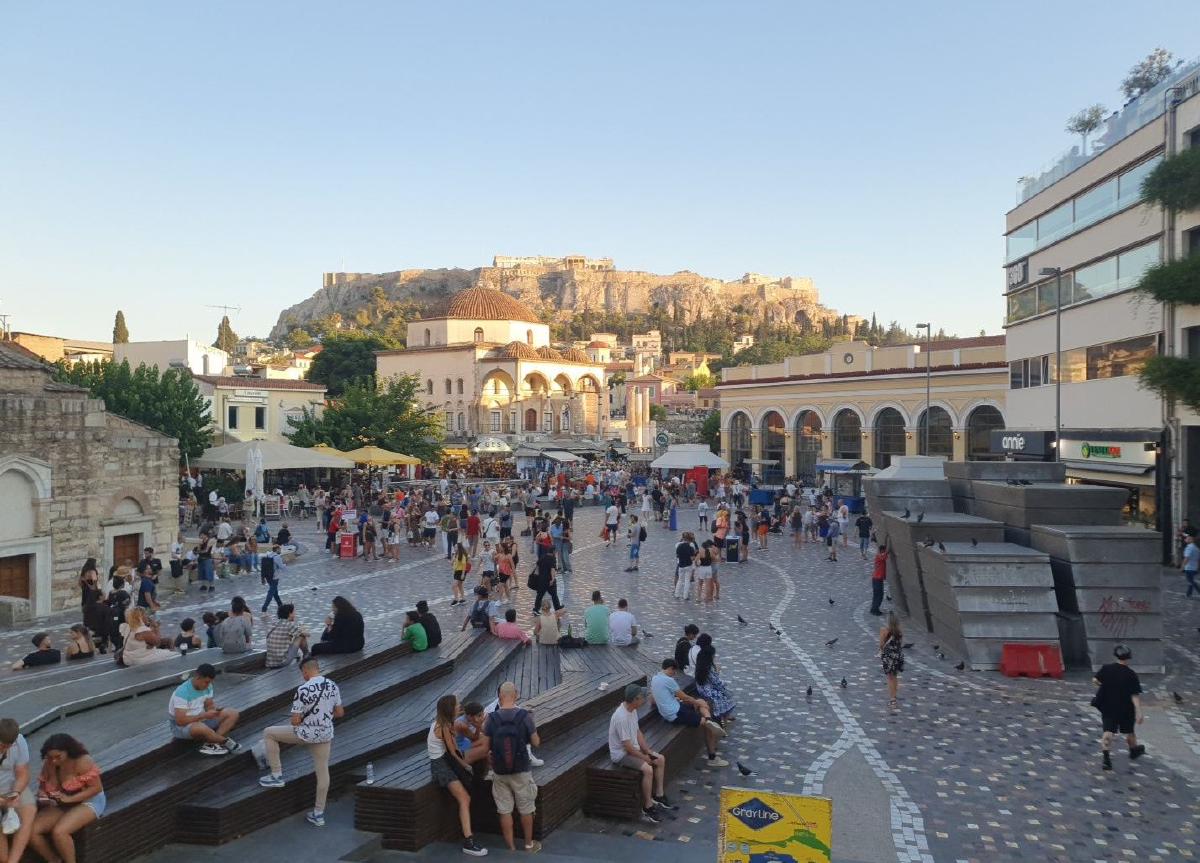
The first time I walked into Monastiraki Square, someone was selling a brass telescope from a blanket on the sidewalk, a street musician was playing Theodorakis on a bouzouki, and behind it all the Parthenon sat up on its hill like it had been watching this exact kind of chaos for 2,500 years.
That’s Monastiraki. It’s loud, it’s a little messy, and it doesn’t care if you’re ready for it. It’s also my favorite neighborhood in Athens — the one I keep coming back to, the one I send friends to, and the one that feels most like the real, unfiltered city.
If you’re planning a trip to Athens, here’s everything you need to know about Monastiraki — how to get there, what to do, where to eat, where to sleep, and how to make the most of the neighborhood that never slows down.
Getting to Monastiraki#
Monastiraki is absurdly well-connected. You can reach it from almost anywhere in Athens without trying.
By metro: Monastiraki station sits on both Line 1 (green, Piraeus–Kifissia) and Line 3 (blue, airport line). If you’re coming from the airport, take Line 3 directly — no transfers, about 40 minutes, €9 one-way. From Syntagma, it’s one stop.
Walking from the Acropolis: Exit the Acropolis site through the main gate, walk down the pedestrian path along Areopagitou Street, and you’ll hit Monastiraki in about 12 minutes. It’s downhill, shaded in parts, and you’ll pass Hadrian’s Library on the way.
Walking from Plaka: Head northwest from Plaka along Adrianou Street and you’ll transition into Monastiraki without even noticing. The two neighborhoods bleed into each other — the energy just shifts from charming to chaotic.
From Piraeus port: Take Metro Line 1 (green) directly to Monastiraki station. About 25 minutes, €1.20.
The Flea Market — What to Buy, When to Go, and How to Bargain#
This is why most people come to Monastiraki the first time, and it’s worth every minute.
The Monastiraki flea market isn’t one single market — it’s a sprawl of shops, stalls, and street vendors that radiates outward from Monastiraki Square along Ifestou Street, Adrianou Street, and the surrounding lanes. What you find depends on when you go.
Weekday Market (Monday–Saturday)#
The permanent shops on Ifestou Street are open daily. These are the established antique dealers, leather shops, and vintage stores. You’ll find:
- Antiques and vintage: Old cameras, brass compasses, vinyl records, Ottoman-era coins, retro Greek movie posters
- Leather goods: Sandals made while you watch (several shops near Ifestou do custom fitting), bags, belts, wallets
- Jewelry: Handmade silver and gold, Greek-inspired designs, evil eye pieces that aren’t the mass-produced tourist version
- Musical instruments: Bouzoukis, baglamas, and other traditional Greek instruments — several specialist shops have been here for decades
- Books and maps: Old Greek editions, vintage travel maps, prints of historical Athens
Weekday mornings (before 11 AM) are the best time if you want to actually browse without fighting crowds. Shop owners are more relaxed and more willing to chat about their stock.
Sunday Flea Market#
This is the main event. Every Sunday morning, Avyssinias Square and the surrounding streets transform into a sprawling open-air bazaar. Vendors set up temporary stalls and spread goods on blankets, and the permanent shops open their doors wider.
Sunday adds a layer of randomness that the weekday market doesn’t have — someone’s grandmother’s entire kitchen, a box of 1970s Greek postcards, military surplus, handmade ceramics from the islands. It’s treasure-hunting with no guarantee, which is what makes it addictive.
Sunday hours: Most vendors set up by 8–9 AM and start packing up around 2 PM. Get there by 10 AM for the best selection.
Bargaining Tips#
Bargaining is expected at the outdoor stalls and with independent vendors, less so in the established shops. Here’s what works:
- Start at 60–70% of the asking price for items at outdoor stalls. If they ask €30, offer €18–20.
- Don’t bargain at established shops with fixed prices displayed. It’s not the culture there and you’ll just get an awkward “no.”
- Buy multiple items from the same vendor and ask for a discount. This works well everywhere.
- Walk away politely if the price isn’t right. If they want to sell, they’ll call you back.
- Cash is king. Many stall vendors don’t take cards, and offering cash makes negotiation easier.
- Be friendly. A smile and a “kalimera” go further than aggressive haggling. Greeks respond well to warmth, badly to pushiness.
Top Things to Do in Monastiraki#
Beyond the flea market, Monastiraki packs more history and atmosphere per square meter than almost anywhere in Athens.
1. Watch Sunset from Monastiraki Square#
Stand in the square around golden hour and face west. The sun drops behind the Ancient Agora with the Acropolis lit pink and orange above. It’s one of the best free views in Athens, and you don’t need a rooftop bar to see it — just stand there with everyone else and watch it happen.
2. Visit the Ancient Agora#
The Ancient Agora — Athens’ original marketplace and civic center — is right next to Monastiraki. This is where Socrates debated, where democracy was practiced daily, and where the beautifully preserved Temple of Hephaestus still stands. It’s less crowded than the Acropolis and arguably more atmospheric.
Entry: €10 or free with the €30 combo ticket (which covers the Acropolis and six other sites — absolutely worth it if you’re visiting more than two).
3. Explore Hadrian’s Library#
Right on the edge of Monastiraki Square, the ruins of Hadrian’s Library are visible from the street, but stepping inside gives you a sense of how massive this 2nd-century complex was. Built by Emperor Hadrian in 132 AD, it once held scrolls, lecture halls, and a pool.
Entry: Included in the combo ticket.
4. Step Into the Tzistarakis Mosque#
The Ottoman-era mosque anchoring the south side of Monastiraki Square now houses a branch of the Museum of Greek Folk Art — specifically a ceramics collection. It’s small, quick to visit, and gives you a sense of the layers of history stacked in this neighborhood.
5. Walk Up to the Anafiotika Houses#
From Monastiraki, walk toward the Acropolis slopes and you’ll find Anafiotika — a tiny village of whitewashed Cycladic-style houses built into the rock. It looks like Santorini teleported into central Athens. Builders from the island of Anafi constructed these homes in the 1800s using island techniques. Quiet, photogenic, and completely unexpected.
6. Gallery-Hop on Avyssinias Square#
The area around Avyssinias Square has developed a small but genuine art and café scene. Between the antique shops, you’ll find independent galleries showing contemporary Greek work, plus some of the best people-watching cafés in the city.
7. Cross Into Psyrri at Night#
Psyrri — Monastiraki’s neighbor to the north — comes alive after dark. Street art covers entire buildings, bars spill onto sidewalks, and small live music venues fill with locals. It’s a 3-minute walk from Monastiraki Square and a completely different energy.
For more ideas beyond Monastiraki, check out our full things to do in Athens guide.
Best Restaurants & Cafes in Monastiraki#
Eating in Monastiraki requires knowing where to look. The square itself and the main tourist drag on Adrianou are full of overpriced, underwhelming places with aggressive hosts. Walk one block in any direction and the quality jumps dramatically. Here are the spots worth your time.
Restaurants#
Bairaktaris — An Athens institution since 1879, right on Monastiraki Square. Yes, it’s touristy. But it’s also the real deal — the kebabs and souvlaki are consistently good, portions are enormous, and prices are surprisingly fair given the location. Order the kebab plate or the mixed grill.
Thanasis — Another Monastiraki Square classic, famous for its kebabs on pita. There’s usually a line, which tells you something. Quick, cheap, and genuinely good. Not a sit-down-and-linger kind of place — more of a “grab a kebab and eat it while people-watching” situation.
Oinopoleion — A few minutes’ walk into Psyrri, this taverna serves excellent traditional Greek food at local prices. The wine list is thoughtful (ask for recommendations), the lamb dishes are outstanding, and the atmosphere feels like someone’s large, loud, very welcoming dining room.
Mavro Provato — “Black Sheep” in Greek, and the name fits. It’s a modern mezedes spot on the Psyrri side of Monastiraki, doing creative twists on traditional small plates. The fried feta with honey is dangerously good. Great for groups who want to order a spread of dishes.
Kostas — A souvlaki stand on Pentelis Square (near Monastiraki) that locals swear by. There’s no menu, no seating, and usually a line out the door. Two options: pork or beef souvlaki in pita with tomato and onion. That’s it. Both are excellent. Open roughly 10 AM to 4 PM — when they sell out, they close.
Cafes#
Couleur Locale — A rooftop bar-café hidden inside a nondescript building on Normanou Street. Take the elevator up and you emerge onto a terrace with a direct, eye-level Acropolis view. Great for a late afternoon drink. Not cheap, but you’re paying for the view — and it delivers.
Six d.o.g.s — Part café, part cultural space, part garden bar. The courtyard out back is one of the best hidden spaces in central Athens — a tree-shaded garden that feels miles away from the chaos of Monastiraki. Good coffee during the day, events and cocktails at night.
TAF (The Art Foundation) — A restored 1870s building tucked behind Monastiraki, housing a gallery, café, and courtyard. The building alone is worth seeing. The coffee is good, and the crowd is a mix of artists, students, and tourists who found it by accident.
For more restaurant recommendations across Athens, see our where to eat in Athens guide.
Where to Stay in Monastiraki#
Monastiraki is one of the best locations to base yourself in Athens — central, metro-connected, walkable to every major site. The trade-off is noise. This is not a quiet neighborhood, especially on weekends. If you’re a light sleeper, bring earplugs or pick a hotel on a side street.
Here are three solid picks at different price points, all within walking distance of Monastiraki Square.
Budget: AthenStyle#
A well-run hostel right in the middle of Monastiraki with a rooftop bar that has direct Acropolis views. Dorms and private rooms available. The rooftop alone makes it worth booking — it’s one of the best budget views in Athens.
From €25/night (dorm) | €70/night (private)
Check availability on Booking.com
Mid-Range: A for Athens#
You’ve probably seen photos from A for Athens’ rooftop — it’s one of the most photographed Acropolis views in the city. The hotel sits directly on Monastiraki Square, rooms are modern and well-designed, and the location is unbeatable. Request a room facing the Acropolis for the view upgrade.
From €120/night
Check availability on Booking.com
Upscale: 360 Degrees Hotel#
A boutique hotel just off Monastiraki Square with a stunning rooftop restaurant and bar. Rooms are contemporary and quiet despite the central location. The 360-degree rooftop views are exactly what the name promises — Acropolis, Lycabettus Hill, and the Athens skyline.
From €180/night
Check availability on Booking.com
Best Tours Departing from Monastiraki#
Monastiraki’s central location makes it a natural starting point for many of Athens’ best tours. Here are two that make genuinely good use of the neighborhood.
Athens City Highlights & Hidden Gems Walking Tour
A 3-hour walking tour starting from Monastiraki Square that covers the Ancient Agora, Plaka, Anafiotika, and lesser-known corners most visitors miss. Small group (max 15), knowledgeable local guides, and you walk away with a real feel for the city beyond the postcard sites.
Athens Food Tour: Monastiraki & Central Market
A 4-hour food walk through Monastiraki, the Central Market, and surrounding streets. 12+ tastings at family-run shops and local favorites, from cheese and olives to loukoumades and souvlaki. This is the best way to eat your way through the neighborhood with someone who knows where to go.
For more options, see our complete best Athens food tours roundup.
Practical Tips for Visiting Monastiraki#
A few things that will make your time in Monastiraki smoother:
Crowds: Monastiraki Square gets packed from about 11 AM to 7 PM, peaking on weekends and during summer. Early mornings (before 10 AM) are when the neighborhood feels most local — shopkeepers hosing down sidewalks, old men drinking coffee on Avyssinias Square, the flea market vendors setting up.
Best time to visit: Shoulder season (April–May, September–October) gives you warm weather without crushing crowds. If you visit in July or August, the heat is intense — plan outdoor exploration for mornings and evenings, and duck into the Ancient Agora or a café during midday.
Pickpocket awareness: Monastiraki is one of the areas in Athens where pickpockets operate, especially in the crowded market areas and on the metro. Keep your phone in a front pocket, use a crossbody bag, and be extra aware in tight crowds. It’s not dangerous — just keep your valuables close. For more on staying safe, read our Athens scams and tourist traps guide.
Cash vs. cards: Most established restaurants and shops take cards, but flea market stalls and smaller vendors are cash-only. Have €20–50 in small bills if you plan to shop the market. ATMs are plentiful around the square.
Noise at night: Monastiraki and neighboring Psyrri have active nightlife. If you’re staying in the area, expect noise on Thursday, Friday, and Saturday nights until late. Hotels on side streets are quieter than those directly on the square.
Public restrooms: There aren’t many. Your best options are cafés (buy a coffee and use theirs), the Ancient Agora museum, or fast-food chains near the square.
Monastiraki on a Budget#
Athens is already one of Europe’s most affordable capitals, and Monastiraki is surprisingly budget-friendly if you know where to look.
- Free walking: The neighborhood itself is the attraction. Walk the flea market, wander Psyrri’s street art, watch sunset from the square — none of this costs anything.
- Souvlaki for lunch: A pita souvlaki at Kostas or Thanasis runs €3–4. That’s a filling, delicious meal for the price of a bad coffee in most European capitals.
- Combo ticket: The €30 archaeological ticket gets you into 7 sites over 5 days, including two in Monastiraki (Ancient Agora and Hadrian’s Library).
- Free entry days: Most archaeological sites and museums offer free admission on the first Sunday of each month (November through March) and on select holidays.
For more ways to save, see our Athens on a budget guide.
Frequently Asked Questions#
Is Monastiraki safe at night?#
Yes. Monastiraki and neighboring Psyrri are busy with restaurants, bars, and pedestrians well into the night. Like any busy urban area, watch your belongings in crowds, but violent crime against tourists here is very rare. The bigger risk is overpaying at a tourist-trap restaurant — which this guide helps you avoid.
What is the Monastiraki flea market famous for?#
The Monastiraki flea market is Athens’ most famous shopping area, known for antiques, vintage items, leather sandals, handmade jewelry, vinyl records, and curiosities. The permanent shops are open daily, but the full experience happens on Sundays when outdoor vendors set up along Avyssinias Square and the surrounding streets.
How much time should I spend in Monastiraki?#
For a thorough visit — the flea market, Ancient Agora, Hadrian’s Library, a good meal, and some wandering — plan for a full half-day (4–5 hours). If you’re just passing through for the market and lunch, 2–3 hours is enough. But Monastiraki rewards lingering, especially if you’re the type who enjoys getting lost in side streets.
Is Monastiraki good for families?#
Yes, with some caveats. Kids tend to enjoy the flea market (it’s a treasure hunt), the Ancient Agora is spacious and less overwhelming than the Acropolis, and souvlaki is universally kid-approved. The area can be crowded and hot in summer — bring water and plan breaks. The market stalls have fragile items at kid-reaching height, so stay alert with younger children.
What is the difference between Monastiraki and Plaka?#
They’re neighbors and share a blurry border along Adrianou Street. Plaka is quieter, more polished, and more traditionally picturesque — neoclassical houses, bougainvillea, and a romantic atmosphere. Monastiraki is louder, grittier, and more energetic — markets, street food, and urban buzz. Most visitors explore both, since they’re a 5-minute walk apart. For a full comparison, see our Athens neighborhoods guide.
Monastiraki isn’t Athens’ prettiest neighborhood or its quietest. But it might be its most honest — a place where 2,000 years of history, a Sunday flea market, the best kebab you’ve ever eaten, and a perfect Acropolis sunset all happen within the same few blocks. It’s the neighborhood that made me fall in love with this city, and I think it’ll do the same for you.