I’ll be honest: you don’t need a car in Athens. The metro is excellent, taxis are cheap, and driving in the city center is a blood-pressure event. But once you want to leave Athens — to chase a sunset at Cape Sounion, explore the Peloponnese, or hit beaches that buses don’t reach — a rental car changes everything.
Having driven thousands of kilometers across mainland Greece and the Peloponnese, I can tell you that renting a car in Athens is one of the best decisions you can make if you’re planning to explore beyond the city. The freedom to pull over at a random coastal taverna, detour to an empty beach, or spend a night in a mountain village is worth every euro.
Here’s everything you need to know to rent a car in Athens without getting ripped off, confused by insurance, or stuck in traffic you didn’t plan for.
Do You Actually Need a Car in Athens?#
Let’s start with the important question. The answer depends entirely on what your trip looks like.
You probably don’t need a car if:
- You’re staying in central Athens for your entire trip
- You’re doing organized day trips (to Delphi, Meteora, etc.)
- You’re island-hopping by ferry — most Greek islands are walkable or have local buses
- You hate driving in chaotic traffic
You absolutely should rent a car if:
- You want to explore the Peloponnese (Nafplio, Epidaurus, Monemvasia, Olympia)
- You’re doing a road trip through mainland Greece
- You want to visit beaches and coastal areas that buses skip
- You’re traveling as a family or group (cheaper than multiple tour tickets)
- You plan to drive to Cape Sounion at your own pace
- You’re visiting in shoulder season when organized tours run less frequently
The sweet spot: Rent a car for the day-trip portion of your Athens stay, not the city portion. Pick it up when you’re ready to leave the city, return it when you come back.
Athens Airport vs City-Center Pickup#
This is the first decision you’ll make, and it matters more than you think.
Athens Airport (Eleftherios Venizelos)#
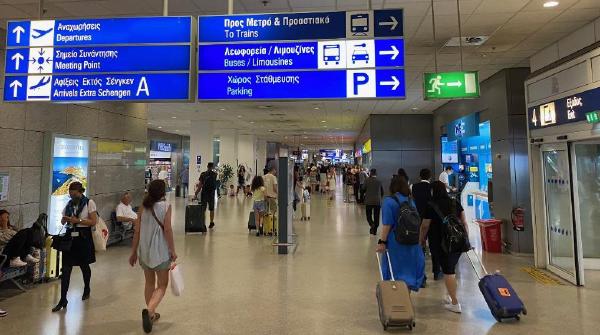
All major international and local rental companies have desks at the airport arrivals hall. This is where most travelers pick up their car.
Pros:
- Widest selection of vehicles and companies
- Easy to grab a car right when you land
- No need to navigate Athens traffic to reach a pickup point
- Good if you’re driving straight out of the city
Cons:
- Airport surcharge adds €15-30 to the total
- You’ll pay for parking at your Athens hotel (€15-25/night in the center)
- Driving from the airport into central Athens on your first day is stressful
City-Center Pickup (Syntagma, Omonia, Monastiraki area)#
Several agencies operate downtown offices. Local Greek companies like Goldcar, AutoUnion, and Enterprise have locations within walking distance of Syntagma Square.
Pros:
- No airport surcharge
- Pick up only when you’re ready to leave the city
- More competitive rates from local agencies
Cons:
- Smaller vehicle selection
- Getting out of the city center can be confusing the first time
- Some agencies require a taxi ride to their lot
My recommendation: If you’re spending your first few days in Athens before heading out on a road trip, skip the airport pickup. Enjoy Athens car-free, then pick up a rental from a city-center agency when you’re ready to hit the road. If your flight arrives and you’re driving straight to the Peloponnese or elsewhere, grab it at the airport.
Compare car rental prices across Athens agencies on DiscoverCars — they aggregate all the major international chains and the smaller Greek agencies, so you can see which pickup location gives you the best deal.
Required Documents & Age Rules#
This catches people off guard. Greece has specific requirements, and agencies will turn you away if you don’t meet them.
What You Need#
| Document | Details |
|---|---|
| Valid driver’s license | EU/EEA licenses accepted as-is. Non-EU licenses need an International Driving Permit (IDP) alongside your home license |
| International Driving Permit | Required for US, Canadian, Australian, and most non-EU drivers. Get one from your home country’s auto association before you travel |
| Credit card | Must be in the driver’s name. Debit cards are rarely accepted for the security deposit |
| Passport | Standard ID requirement |
Age Requirements#
- Minimum age: 21 at most companies (some require 23)
- Young driver surcharge: Drivers under 25 pay an extra €5-15/day
- Maximum age: Some agencies cap at 70-75 — check before you book if relevant
- Additional drivers: Usually €5-10/day extra. Some agencies include one free additional driver with online bookings
Important: Your credit card must have enough available credit for the security deposit, which can be €500-1,500 depending on the car and insurance you choose. This is a hold, not a charge — it’s released when you return the car.
Insurance: The Part Everyone Gets Wrong#
Insurance is where car rental companies make their real money, and where most travelers either overpay or leave themselves exposed. Here’s what actually matters.
What’s Included in the Base Rate#
Every rental in Greece includes the legally required minimum:
- CDW (Collision Damage Waiver): Covers damage to the rental car, but with an excess (deductible) of €500-1,500
- Theft Protection: Same deal — covers theft but with a high excess
- Third-Party Liability: Covers damage you cause to other vehicles or property
The catch? That CDW excess means you’re on the hook for the first €500-1,500 of any damage. A scratched bumper in a tight parking spot? That’s your €500.
Your Insurance Options#
Option 1: Buy the agency’s Super CDW (excess reduction)
- Costs €10-25/day
- Reduces or eliminates the excess
- Convenient, but expensive for longer rentals
Option 2: Buy standalone excess insurance online
- Companies like iCarhireinsurance or the insurance option on DiscoverCars offer annual policies for €40-80
- Covers the excess if you need to claim — you pay the agency first, then get reimbursed
- Much cheaper for rentals longer than 3-4 days
Option 3: Check your credit card
- Some premium credit cards (Chase Sapphire, Amex Platinum, etc.) include car rental CDW coverage
- Read the fine print — some exclude Greece, some require you to decline the agency’s CDW
- Not all cards cover the full excess amount
My advice: For a short rental (1-3 days), the agency’s Super CDW is easiest. For anything longer, buy a standalone excess policy before you travel. Either way, always decline the agency’s upsells on personal accident insurance, roadside assistance bundles, and “premium” packages at the counter — they’re overpriced and usually redundant.
The Tire & Glass Trap#
One thing most people miss: standard CDW in Greece typically does not cover damage to tires, windshield, undercarriage, or the roof. This matters if you’re driving on gravel roads to remote beaches. Ask specifically about tire and glass coverage, or make sure your standalone policy includes it.
How Driving in Athens Differs from the Rest of Greece#
This is the part where I try to be reassuring and honest at the same time.
Driving in Athens: The Truth#
Athens traffic is intense. Not Paris intense, not Rome intense — but it has its own flavor of chaos. Here’s what to expect:
- Motorcycles and scooters weave through traffic constantly. Check your mirrors obsessively.
- Lane markings are more of a suggestion. A two-lane road often becomes three lanes of cars.
- Double parking is a way of life. Cars park on sidewalks, in loading zones, everywhere.
- One-way streets dominate the center, and GPS occasionally gets confused by recent changes.
- Rush hours (7:30-9:30 AM and 5:00-8:00 PM) are genuinely gridlocked. Avoid driving in central Athens during these times.
The good news: Greeks are actually decent drivers. The apparent chaos has a rhythm to it. People use their horns to communicate, not to fight. You’ll adjust faster than you think.
Driving Outside Athens: Much Better#
Once you’re out of the city, driving in Greece is genuinely enjoyable:
- National highways (Attiki Odos, Olympia Odos, and the Athens-Thessaloniki motorway) are modern, well-maintained, and fast
- Coastal roads are scenic and usually well-signed
- Mountain roads in the Peloponnese and mainland Greece are narrow but paved and manageable
- Gas stations are frequent on main routes, sparser in rural areas
- Signage is in Greek and English on major roads
The golden rule: Pick up your car in the morning, get out of Athens heading north or south, and enjoy. The real Greece is on those roads between towns.
Parking, Tolls, Fuel & Hidden Costs#
These are the things that surprise people when the credit card bill arrives.
Parking#
| Location | Cost |
|---|---|
| Central Athens hotel | €15-25/night (if the hotel even has parking) |
| Athens street parking | €1-3/hour in metered zones, free in many residential areas |
| Shopping mall parking | Usually free for 2-3 hours |
| Small towns | Almost always free |
| Beach parking | Free at most public beaches, €5-10 at organized beaches |
Tip: In Athens, look for underground parking garages near your hotel. The one at the Athens Concert Hall (Megaro Mousikis) and the one near Syntagma Square are reliable options. Street parking in Koukaki, Pangrati, or Exarcheia is usually free but competitive.
Tolls#
Greece has a toll highway system, and the fees add up. Here are the main routes from Athens:
| Route | Approximate Toll |
|---|---|
| Athens → Corinth (via Attiki Odos + highway) | €8-10 |
| Athens → Nafplio | €10-12 |
| Athens → Delphi | €8-10 |
| Athens → Thessaloniki | €30-35 |
| Athens → Meteora (via Thessaloniki highway) | €22-25 |
| Athens → Olympia | €18-20 |
Tolls are cash or card. Most toll stations now accept contactless payment, but keep some coins and small bills handy just in case, especially on older toll sections.
Fuel#
- Fuel type: Most rental cars run on unleaded (αμόλυβδη / amólivdi). Diesel is cheaper but less common in rental cars.
- Price: Around €1.70-1.90/liter for unleaded (as of early 2026). Greece is one of the more expensive countries in Europe for fuel.
- Full-to-full policy: Most agencies use this. Return the car with the same fuel level you received it. If you return it empty, they’ll charge you a premium rate to refill.
Other Hidden Costs to Watch#
- GPS rental: €8-15/day from the agency. Skip it — Google Maps works perfectly in Greece with offline maps.
- Cross-border fee: If you plan to drive to neighboring countries (North Macedonia, Albania, Bulgaria), you need to declare this. Extra insurance and fees apply, typically €30-50.
- One-way drop-off: Returning the car at a different location costs €50-200+ depending on distance.
- Late return: Even 30 minutes late can trigger an extra day’s charge. Plan accordingly.
- Baby/child seats: Required by law for children under 135 cm. Rental agencies charge €5-10/day, or bring your own.
Best Road Trip Routes from Athens#
This is where a rental car really pays for itself. Here are the routes I’d recommend, in order of how much driving they require.
Half-Day: Athens to Cape Sounion (70 km, 1 hour)#
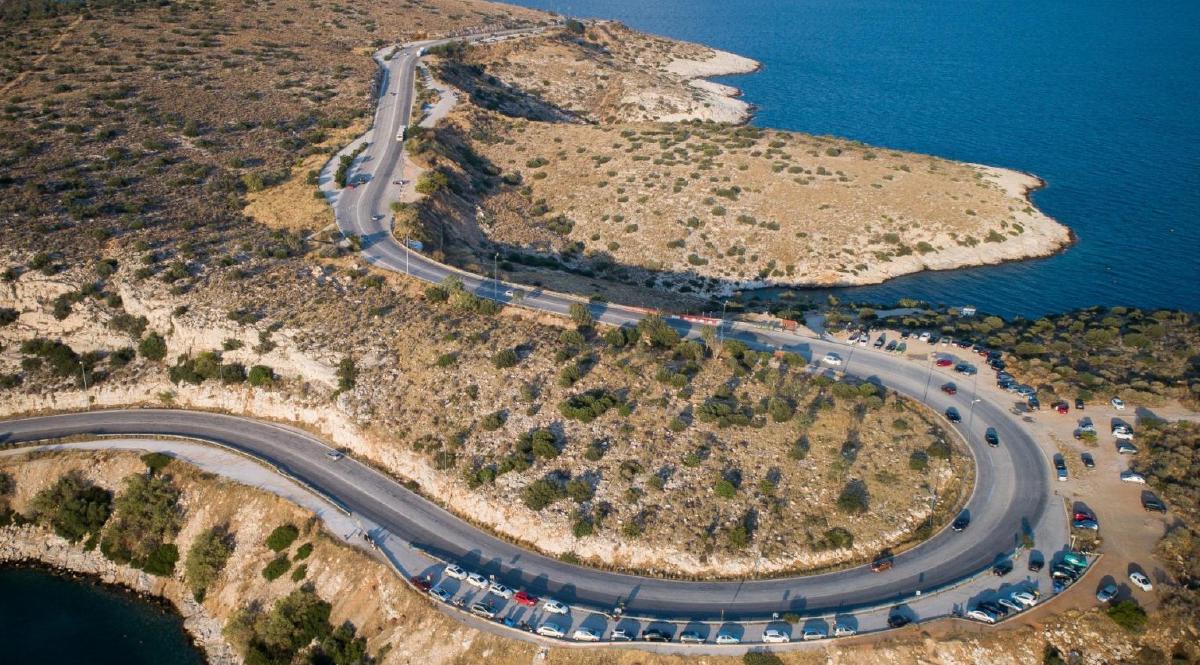
The classic. Drive the coastal road through Glyfada, Vouliagmeni, and down to the tip of the Attica peninsula. Stop for a swim at one of the coves along the way, visit the Temple of Poseidon at sunset, and drive back after dark. This is the perfect first rental car day trip.
Full Day: Athens to Nafplio (140 km, 2 hours)#
Cross the Corinth Canal, enter the Peloponnese, and reach one of the prettiest towns in Greece. Add a stop at Ancient Corinth or Epidaurus on the way. Nafplio has a gorgeous old town, a Venetian fortress, and excellent restaurants. Easy to do as a day trip or overnight.
2-3 Days: The Peloponnese Loop#
This is the road trip Greece was made for:
- Day 1: Athens → Corinth Canal → Nafplio (overnight)
- Day 2: Nafplio → Epidaurus → Monemvasia (overnight)
- Day 3: Monemvasia → Mystras → Olympia or back to Athens
Total distance: ~600 km. Mix of highway and mountain roads. Every stop is spectacular.
2 Days: Athens to Delphi & Meteora#
For history lovers:
- Day 1: Athens → Delphi (2.5 hours). Visit the oracle, the museum. Overnight in Delphi or drive on to Kalambaka.
- Day 2: Meteora monasteries in the morning. Return to Athens via Thessaly.
Total distance: ~700 km round trip. The Meteora leg is longer but the landscapes are unreal.
1 Day: Athens to the Peloponnese Beaches#
Head south toward the coast between Tolo and Porto Heli. Beaches that buses don’t reach, small fishing villages, and tavernas where you’re the only tourist. Combine with a stop in Nafplio for lunch.
Compare car rental prices for your dates on DiscoverCars — booking a few weeks in advance for peak season (June-September) can save you 30-40% compared to showing up at the airport counter.
Tips for a Smooth Rental Experience#
After many rentals in Greece, here’s what I’ve learned the hard way:
Photograph everything. Before you drive off the lot, walk around the car and take photos/video of every scratch, dent, and scuff. Email them to yourself so they’re timestamped. Do the same when you return the car.
Book online, not at the counter. Counter rates are almost always higher, and you have less leverage to negotiate insurance.
Get an automatic if you’re not comfortable with manual. Automatics cost more (€5-15/day extra) but are available from most agencies. Greece has lots of hills.
Avoid driving in Athens on weekdays. Pick up or return your car on a weekend morning when traffic is light.
Download offline maps. Cell coverage is good on main routes but spotty in mountain areas. Download Google Maps offline for the Peloponnese and any mountain routes.
Fill up before returning to the airport. Gas stations near the airport charge a premium. Fill up at a station along the Attiki Odos highway instead.
Keep your rental agreement in the car. Police checkpoints are rare but do happen, especially on major highways.
Watch for speed cameras. Greece has fixed and mobile speed cameras. Highways are usually 120-130 km/h, national roads 90 km/h, and urban areas 50 km/h. Fines are steep.
Frequently Asked Questions#
Do I need an International Driving Permit (IDP) to rent a car in Greece?#
If you hold an EU/EEA driving license, no — your license is valid across the EU. If you hold a license from the US, Canada, Australia, or most other non-EU countries, yes — you need an IDP alongside your home license. Get it from your country’s automobile association before you travel. It costs around $20 and takes minutes to process in person.
Is it safe to drive in Greece?#
Yes, but with caveats. Greece’s national highways are modern and well-maintained. Rural and mountain roads are narrow but paved. The main adjustment is driving culture — Greeks tend to drive faster, overtake more aggressively, and treat lane markings as optional. Outside Athens, traffic is light and driving is genuinely pleasant. Just stay alert, especially on two-lane roads where overtaking happens frequently.
How much does it cost to rent a car in Athens?#
Budget €25-45/day for a compact car in shoulder season (April-May, October) and €40-70/day in peak summer (June-September). These are online booking rates — counter rates are higher. A week-long rental in July for a compact automatic typically runs €280-400 total. Add €10-15/day if you want full insurance coverage from the agency. Compare current rates on DiscoverCars to see what’s available for your dates.
Can I take a rental car on a Greek island ferry?#
Technically yes, but it’s complicated. Most rental agreements prohibit taking the car on ferries without prior written approval, and many agencies flat-out refuse. If you plan to drive on an island, it’s usually better (and cheaper) to rent a separate car on the island itself. Exceptions exist for large islands like Crete, where some Athens-based agencies allow ferry transport with advance notice and extra insurance.
What side of the road do they drive on in Greece?#
Greeks drive on the right side of the road, same as continental Europe and the US. If you’re coming from the UK, Australia, or Japan, this is the main adjustment you’ll need to make. Roundabouts go counter-clockwise.
Final Checklist Before You Book#
- Confirm your driver’s license is valid (and get an IDP if needed)
- Check that your credit card has enough available credit for the deposit (€500-1,500)
- Decide on airport vs city-center pickup based on your itinerary
- Book online in advance — at least 2-3 weeks before for summer
- Choose your insurance strategy (agency Super CDW, standalone policy, or credit card coverage)
- Download offline maps for your route
- Budget for tolls and fuel
Ready to book? Compare car rental prices across all Athens agencies on DiscoverCars. They show rates from local Greek companies alongside Hertz, Avis, and Budget — and the local agencies are often 20-30% cheaper.
Planning your Athens trip? Check out our complete Athens travel guides for hotel recommendations, restaurant picks, and day trip ideas.