You don’t need a guide to see Athens. The city’s historic center is compact, walkable, and follows a natural route that connects the major sites in a logical loop. With a good map and some context about what you’re looking at, you can cover the best of Athens in a single day on foot — at your own pace, on your own schedule, stopping where you want and skipping what doesn’t interest you.
I’ve walked this route dozens of times, tweaking it until it flows perfectly. It covers the essential ancient sites, the best neighborhoods, the most photogenic spots, and enough food and coffee stops to keep you fueled. Total distance is about 6 km — a comfortable day of walking with plenty of stops.
Here’s your self-guided walking tour of Athens, step by step.
Tour Overview#
| Detail | Info |
|---|---|
| Total distance | ~6 km (3.7 miles) |
| Walking time | 2-3 hours (walking only) |
| Total time with stops | 5-7 hours |
| Start point | Syntagma Square |
| End point | Thissio (or loop back to Monastiraki) |
| Best time to start | 8:00-9:00 AM |
| Difficulty | Easy-moderate (some uphill sections near the Acropolis) |
| Cost | Free (or €20 if you enter the Acropolis) |
What to bring:
- Comfortable walking shoes — cobblestones and marble can be slippery
- Water bottle — refill at public fountains throughout the route
- Sunscreen and hat (summer)
- Camera/phone
- Cash for coffee, snacks, and souvlaki stops (€15-20 is enough)
Stop 1: Syntagma Square#
Start here — 15-20 minutes
Begin at Athens’ central square, which sits in front of the Greek Parliament building (the former Royal Palace). This is the heart of modern Athens and the place where major political events, celebrations, and protests happen.
What to see:
- The Parliament Building — Grand neoclassical building from the 1840s, originally built as a palace for King Otto
- Tomb of the Unknown Soldier — The marble relief below the Parliament, guarded 24/7 by the Evzones (Presidential Guard)
- Changing of the Guard — Happens every hour on the hour. The Evzones’ slow, choreographed steps and traditional uniform (fustanella kilt, pompom shoes) are one of Athens’ most distinctive sights
Direction: From Syntagma, walk down the right side of the square toward the National Garden entrance.
Stop 2: National Garden#
10-15 minutes walking through
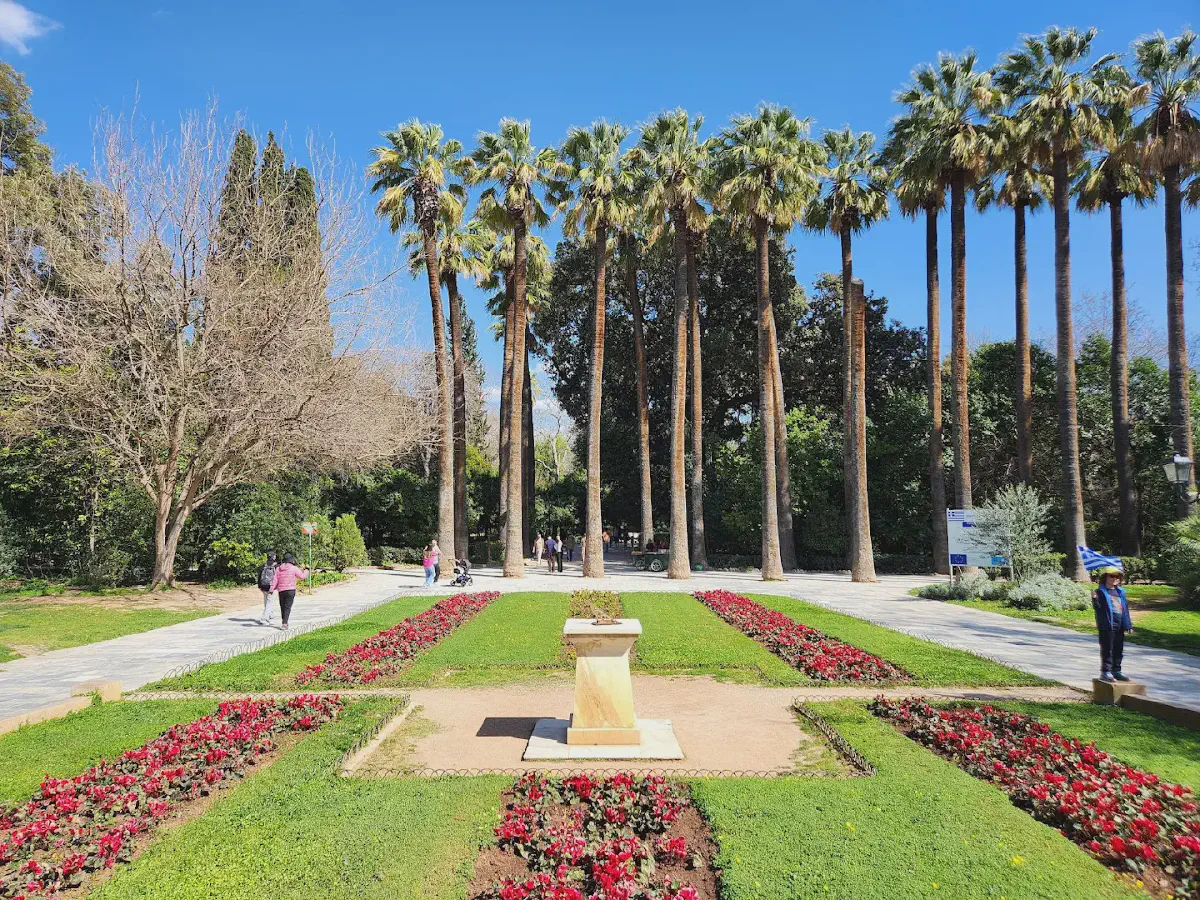
Enter the gardens through the gate near the Parliament. This 15-hectare green space is Athens’ central park — shaded paths, ponds with turtles, neoclassical statues, and a welcome escape from the city’s intensity.
What to notice:
- Ancient ruins scattered among the trees — column fragments, inscriptions, and architectural pieces that were found on the site
- The duck pond — surprisingly peaceful for the middle of a capital city
- The small zoo — modest but free, with goats, peacocks, and ducks. Good for families
Walk through the garden on the main path heading south. You’ll exit near the Zappeion building — a beautiful neoclassical hall used for events and exhibitions.
Direction: Exit the garden from the south side and walk toward Hadrian’s Arch, which you’ll see across the road.
Stop 3: Hadrian’s Arch & Temple of Olympian Zeus#
10-15 minutes
Hadrian’s Arch is a Roman gate built in 131 AD to mark the boundary between the ancient Greek city and the new Roman quarter built by Emperor Hadrian. It stands right on the street — no ticket needed, walk right through it.
Behind it, you can see the massive columns of the Temple of Olympian Zeus — one of the largest temples ever built in the ancient world. It took over 600 years to complete (started in the 6th century BC, finished by Hadrian in the 2nd century AD). Only 15 of the original 104 Corinthian columns remain, but the scale is still jaw-dropping.
What to see for free: The temple is visible through the fence. The fallen column that lies on the ground inside is one of the most photographed ruins in Athens.
Optional paid entry: €8 (or free on the first Sunday of the month, November-March). Worth it if you want to walk among the columns.
Direction: Turn around and walk north up Lysikratous Street into Plaka.
Stop 4: Plaka#
20-30 minutes wandering
You’ve just entered Athens’ oldest continuously inhabited neighborhood. Plaka has been a residential area for over 3,000 years — the same streets have been walked since before the Parthenon was built.
What to notice:
- Neoclassical houses — The 19th-century architecture, often with iron balconies and painted shutters
- The Lysikrates Monument — A circular marble structure from 334 BC, the oldest surviving use of Corinthian columns on the exterior of a building. It’s right on the street as you enter Plaka.
- Small Byzantine churches — Look for the tiny Chapel of the Metamorphosis (11th century) and Agios Nikolaos Ragavas
- Cats — Plaka’s unofficial residents. They’re everywhere, well-fed, and photogenic.
Route through Plaka: Walk up Lysikratous, turn left on Adrianou (the main tourist street — browse but don’t eat here), then turn right onto Kydathineon Street for the more atmospheric, less touristy side of Plaka.
Direction: From upper Plaka, follow signs uphill toward Anafiotika.
Stop 5: Anafiotika#
15-20 minutes
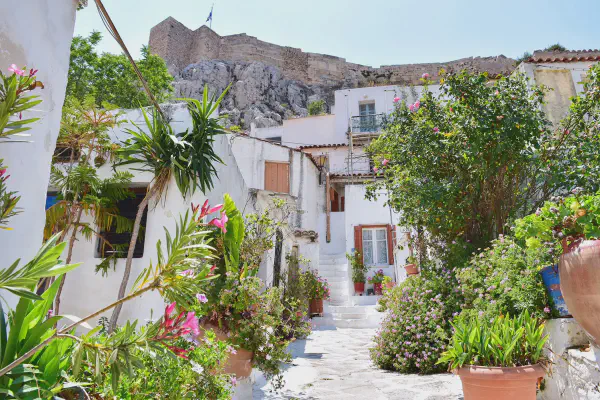
This is the hidden gem of the walking tour. Anafiotika is a tiny village of whitewashed houses clinging to the north slope of the Acropolis — built in the 1840s by workers from the Cycladic island of Anafi who recreated their island architecture in the middle of the capital.
What to expect:
- Narrow alleyways barely wide enough for one person
- White-washed walls draped in bougainvillea
- Cat colonies lounging in doorways
- Sudden views of the city through gaps between houses
- Near-complete silence, despite being 200 meters from the tourist crowds
Finding it: Anafiotika is easy to miss. From the upper streets of Plaka, look for stone stairs heading upward near Stratonos Street. You’ll know you’ve found it when the houses turn white and the alleys narrow to arm-width.
Direction: Wind your way through Anafiotika and back down, heading toward the Acropolis entrance via the path above Plaka.
Stop 6: The Acropolis#
1-2 hours (if entering) / 20 minutes (outside views)
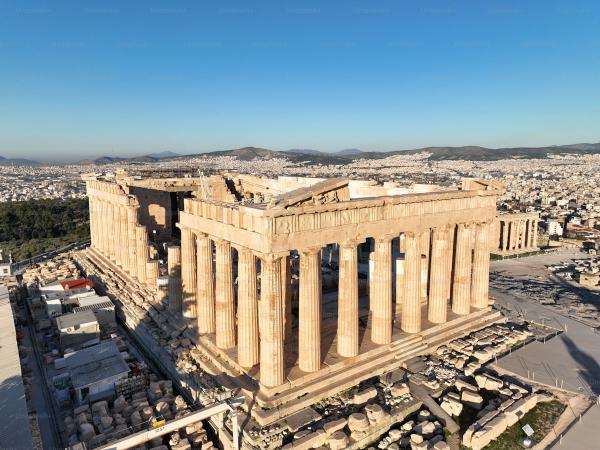
The big one. The Acropolis — literally “high city” — has been the center of Athenian life for 5,000 years. What you see on top is mostly from the 5th century BC, the golden age of Athens under Pericles.
If entering (€20 or free on first Sunday Nov-Mar):
- Propylaea — The monumental gateway, designed to overwhelm you as you enter. It works.
- Temple of Athena Nike — Small but elegant, on your right as you enter
- The Parthenon — No explanation needed. Stand in front of it and absorb it.
- Erechtheion — The temple with the famous Caryatid columns (the female figures holding up the roof). The originals are in the Acropolis Museum; these are replicas.
- The views — From every edge of the Acropolis, you get panoramic views of Athens stretching to the sea
If not entering: Walk along the base of the Acropolis on the south side (Dionysiou Areopagitou walkway) for excellent upward views of the walls and the Parthenon. You can see a surprising amount from outside.
Acropolis Small-Group Guided Tour
If you want context with your visit, a guided tour makes the Acropolis come alive. Small groups (max 18), skip-the-line entry, and a guide who explains what you’re actually looking at.
Also on Viator: Book an Acropolis guided tour on Viator →
Direction: Exit the Acropolis and head to Areopagus Hill (Mars Hill), directly below the entrance on the west side.
Stop 7: Areopagus Hill (Mars Hill)#
10-15 minutes
Just below the Acropolis entrance, this bare rock hill is where the Athenian high court met and where the apostle Paul delivered his famous sermon to the Athenians. Climb the slippery marble steps to the top for one of the best viewpoints in Athens — the Ancient Agora spreads below you, the city extends to the horizon, and the Acropolis towers directly above.
Be careful: The smooth marble rocks are very slippery, especially in the morning when there’s moisture. Wear shoes with good grip and take your time.
What to see from the top:
- Ancient Agora and Temple of Hephaestus below
- The Stoa of Attalos (reconstructed columned building)
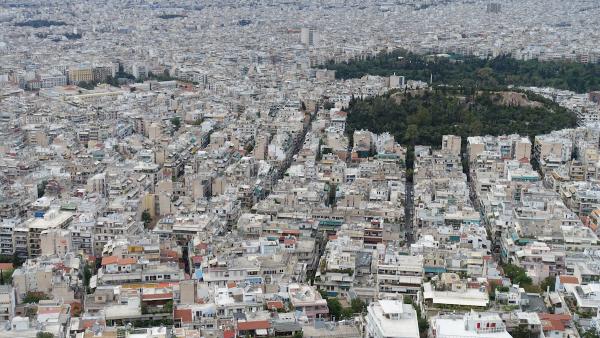
- The city stretching north to Lycabettus Hill
- The Acropolis above and behind you
Direction: Descend Areopagus carefully and take the path heading northwest, downhill toward the Ancient Agora.
Stop 8: Ancient Agora (Outside View) & Thissio#
15-20 minutes
The Ancient Agora was the heart of ancient Athens — the marketplace, the political center, the gathering place where Socrates debated, where democracy was practiced daily. You can see a lot from the fenced perimeter:
What to see from outside (free):
- Temple of Hephaestus — The best-preserved ancient Greek temple in the world. Unlike the Parthenon, this temple still has its roof, its columns, and much of its original decoration intact. The view from outside along Adrianou Street is excellent.
- Stoa of Attalos — The long, columned building was reconstructed in the 1950s and houses the Agora Museum
Optional paid entry: €10 (or free on first Sunday Nov-Mar). Worth it for the peaceful paths and the museum inside the Stoa.
Continue walking along the path that runs between the Agora and the Dionysiou Areopagitou / Apostolou Pavlou pedestrian walkway. This tree-lined promenade is one of the best walks in Athens.
Direction: Walk along Apostolou Pavlou toward Monastiraki.
Stop 9: Monastiraki Square & Flea Market#
20-30 minutes
Monastiraki Square is the most energetic spot in Athens — the point where ancient, medieval, and modern Athens collide. You’ve got the Acropolis looming above, a Roman library next door, a Ottoman mosque in the square, and a metro station below.
What to see:
- Tzistarakis Mosque — 18th-century Ottoman mosque, now housing part of the Museum of Greek Folk Art
- Hadrian’s Library — The ruins of a massive Roman library complex, visible from the square (paid entry, or free on the first Sunday Nov-Mar)
- Monastiraki Flea Market — Walk into the streets around Avyssinias Square for the permanent flea market. Antiques, vinyl records, vintage cameras, brass objects, and things that defy description. The Sunday outdoor market is the full experience, but daily browsing is excellent.
Direction: From Monastiraki, walk south into Psyrri via Normanou Street or any side street heading into the neighborhood.
Stop 10: Psyrri#
15-20 minutes
A 5-minute walk from Monastiraki, Psyrri feels like a different world. This former industrial neighborhood has reinvented itself as Athens’ street art capital, nightlife hub, and home to some of the city’s best restaurants.
What to notice:
- Street art — Entire building facades covered in murals. The streets around Pittaki, Sarri, and Agatharchou are especially rich
- Pittaki Street — A narrow alley illuminated by donated lamps and chandeliers, creating one of the most photographed streets in Athens
- The transition — From tourist-packed Monastiraki to local, creative Psyrri in just one block. This is a lesson Athens teaches repeatedly: walk one street away from the tourist path and find the real city
Direction: Walk through Psyrri heading northeast toward Evripidou Street (the spice street).
Stop 11: Evripidou Street & Central Market#
15-20 minutes
Evripidou Street runs one block south of the Central Market and is lined with spice shops that have been there for generations. The street smells incredible — oregano, cinnamon, saffron, dried herbs piled to the ceiling. Walk slowly, inhale, and step into any shop that catches your eye.
Then cross Athinas Street to the Central Market (Varvakios Agora). Even if you don’t buy anything, walking through the fish hall (towers of sea bream on ice, octopus hanging like laundry) and the meat hall (whole lambs, sausages, mountains of offal) is one of Athens’ most visceral sensory experiences.
What to look for:
- Spice shops with open sacks of mountain tea, oregano, and saffron
- The fish market — Athens’ most photogenic and aromatic space
- Tiny restaurants inside the market serving bowls of tripe soup (patsas) — a legendary Athenian hangover cure
See our shopping guide for what to buy at the market.
Direction: Walk south from the Central Market back toward Monastiraki on Athinas Street.
Stop 12: Ermou Street & Return#
10-15 minutes
Your route south takes you across Ermou Street — Athens’ main pedestrian shopping boulevard. This is modern Athens: international brands, Greek shops, street performers, and a constant stream of people. It’s useful for context — after a morning in ancient ruins and traditional neighborhoods, Ermou reminds you that Athens is a living, modern city.
What to notice:
- Kapnikarea Church — A beautiful 11th-century Byzantine church sitting right in the middle of Ermou Street. Shopping chaos flowing around an 800-year-old church is perfectly Athenian.
End of tour: From Ermou, you can loop back to Monastiraki (5-minute walk), catch the metro from Monastiraki or Syntagma, or continue to Thissio for sunset drinks along the pedestrian walkway.
Sunset Extension: Philopappos Hill#
If your tour ends in the late afternoon, add this:
Walk from Thissio to the entrance of Philopappos Hill on Dionysiou Areopagitou. The path winds through pine trees up to the Philopappos Monument — a Roman-era monument with the best sunset viewpoint in Athens.
From the top, you watch the sun set behind the Saronic Gulf while the Parthenon glows golden beside you. It’s free, it’s beautiful, and it’s the perfect ending to a day of walking through 2,500 years of history.
Time needed: 20 minutes up, 30-60 minutes at the top, 15 minutes down Bring: A drink, a snack, a blanket to sit on
Practical Tips#
Start early. Begin at 8-9 AM, especially in summer. The morning is cooler, sites are less crowded, and you’ll finish the main route before the afternoon heat.
Wear good shoes. Athens’ surfaces change constantly — marble, cobblestones, gravel, smooth rock. Sandals are not ideal for this walk. Bring comfortable walking shoes with good grip.
Carry water. Public drinking fountains exist along the route (the water is safe and cold). Carry a refillable bottle and top up frequently.
Pace yourself. This isn’t a race. The route is designed with natural pause points — coffee in Plaka, lunch in Thissio, browsing in Monastiraki. Take every one of them.
Go off-script. The best moments on a walking tour are unplanned. If a side street looks interesting, turn into it. If a cafe has a terrace with a view, sit down. The route is a framework, not a rulebook.
Want a guided version? If partway through you decide you want someone explaining what you’re looking at, guided walking tours cover a similar route with expert commentary.
Athens Highlights Walking Tour
Covers the Acropolis and historic center with a knowledgeable guide who brings the history to life. Skip-the-line entry included.
Also on Viator: Book a walking tour on Viator →
Frequently Asked Questions#
How long does this walking tour take?#
Walking time alone is about 2-3 hours. With all the stops — lingering at viewpoints, coffee breaks, wandering through Anafiotika, browsing the flea market, lunch — plan for 5-7 hours. There’s no rush.
Is the walking tour difficult?#
Mostly flat with one significant uphill section (the climb to the Acropolis and Areopagus). The total distance is about 6 km. Anyone with basic fitness can do it comfortably. Wear shoes with good grip — the marble surfaces can be slippery.
Can I do this tour with kids?#
Yes, though kids might get restless at some of the longer historical stops. The National Garden (playground and small zoo), Monastiraki Flea Market, and the Central Market are the kid-friendly highlights. Consider shortening the route or adding ice cream stops.
See our Athens with kids guide for family-specific tips.
Do I need to enter the Acropolis?#
You don’t have to — the route works either way. You can see the Acropolis from multiple viewpoints along the walk (Areopagus, Philopappos, the pedestrian walkway). But if it’s your first time in Athens, entering the Acropolis is worth the €20.
Is this route accessible for wheelchairs or strollers?#
Partially. Syntagma, the National Garden, Ermou Street, and the Monastiraki area are mostly flat and paved. Plaka and Anafiotika involve steep stairs and cobblestones. The Acropolis has a wheelchair-accessible entrance (elevator) but the hilltop itself is uneven.
What’s the best time of year for this walking tour?#
Spring (April-May) and fall (September-October) are ideal — comfortable temperatures, manageable crowds, and beautiful light. Summer works but start very early (8 AM) to avoid the worst heat. Winter is surprisingly pleasant on sunny days.
Can I download a map of this route?#
Open Google Maps on your phone and search for each stop in order — you can follow the route live. Alternatively, screenshot the stops listed above and navigate between them. The route is intuitive and Athens’ historic center is small enough that you won’t get lost for long.
The Bottom Line#
This walking tour gives you the highlights of Athens in a single day — ancient ruins, hidden neighborhoods, street art, markets, panoramic views, and enough food stops to keep you fueled. It’s free (or €20 if you enter the Acropolis), it’s self-paced, and it covers the same ground that guided tours charge €50-80 for.
The only thing you don’t get is the stories — and for that, a guidebook or an audio guide fills the gap nicely.
Start at Syntagma at 9 AM, walk at your own pace, eat souvlaki for lunch in Thissio, and finish on Philopappos Hill for sunset. That’s a perfect Athens day — and you planned it yourself.
Planning a longer stay? See our 3-day itinerary, 5-day itinerary, and things to do in Athens.